“Many Fathers of the Church and early Christian writers have identified Christ himself as the Good Samaritan. The man who falls into the hands of thieves is a symbol of humanity wounded by original sin and personal sin. St. Augustine has commented: ‘These offenses robbed mankind of immortality. They covered him with wounds and made him susceptible to sin.’ St. Bede has written that sins are called wounds because they destroy the integrity of human nature. The thieves represent the devil, unrestrained human passions, scandal… The Levite and the priest symbolize the Old Covenant, which cannot cure these wounds. The inn is a symbol of the Church. ‘What would have happened to this poor Jew if the Samaritan had stayed at home? What would have happened to our souls if the Son of God had not undertaken his journey?’ (R.A. Knox) Jesus is moved with compassion for man and heals his wounds, making them his own. St. John wrote to the early Christians: ‘In this the love of God was made manifest among us, that God sent his only Son into the world, so that we might live through him… Beloved, if God so loved us, we also ought to love one another.’”
Length: 166 pages
Size: 9.9 x 6.7 x 0.8 inches
Binding: hardcover
Publisher: IVP Academic (September 30, 2009)
ISBN: 978-0-8308-2920-0 IVP Order Code: 2920
There is a problem in contemporary biblical criticism. Some say it began with Baruch Spinoza, while others trace it back even further to William of Ockham. The problem manifests itself in the historical-critical method, which, in the words of Pope Benedict XVI, is a “hermeneutic of suspicion.” It operates on the notion that if certain phenomena are unobservable in our time, then it didn’t exist in antiquity either. This can lead to major problems when it comes to examining the miracles of the New and Old Testaments. They are often explained away as mere pious exaggeration.
Another problem concerning contemporary views of Scripture is the wide chasm between exegesis and theology. This dichotomy is surely of modern invention. When we look back on the great minds of Christianity, we see that this wasn’t always the case. It used to be that the Sacred Page was the soul of theology and Vatican II sought to once again make it so, but like so many other aspects of the Second Vatican Council, it has yet to be fully realized. However, there are a noble few who are working towards implementing this call of Vatican II, both inside and outside of the Church.
One of these few is Thomas Oden and his collaborators in the Ancient Christian Commentary on Scripture (ACCS) series published by InterVarsity Press. This series has served to remind us that the Church Fathers are the locus for the reuniting of exegesis and theology. In the Fathers, exegesis informs theology and theology informs exegesis. More importantly Scripture is read ex corde ecclesiae, from the heart of the Church. In the ACCS series we were introduced to a plethora of Church Fathers, from both East and West, and their line by line commentaries on all of the books of Sacred Scripture (some of which had never before appeared in English). The downside to this format is that you only get little snippets of the Fathers’ commentaries. For those who do not have the means or training to look up the full commentary in the original language, this can leave one burning with a desire for more, yet with no means of which to quench it.
Until now, that is. Oden and Gerald Bray have provided us with the fulfillment of our desire in the form of the Ancient Christian Texts (ACT) series. ACT presents for the first time in English full commentaries by the likes of Ambrosiaster, Origen, Theodore of Mopsuestia, Cyril of Alexandria, and many others. The translations are fresh and modern (described as a “thought-for-thought translation”) in order for the reader to take away as much as possible. This philosophy of translation allows the commentaries to be accessible to all. Currently in the series are:
Many thanks to Heather Mascarelloand the good folks at InterVarsity Press who have provided me with a review copy of Ambrosiaster’s Commentary on Galatians-Philemon. Ambrosiaster is an enigmatic Father of the Church, the writings of whom were once thought to be those of Ambrose of Milan. This alone gives witness to the importance of his corpus. His exegetical method is practical and pastoral. He also shows a good knowledge of the Jewish laws and Scripture, which is evidenced especially in his commentaries on Galatians and Philippians. Consequently, his knowledge of Judaism led some to falsely believe that he was the Jewish convert, Isaac of Rome. Regardless of his true identity, his Pauline commentaries are of great importance to the history of exegesis, on par with those of Chrysostom.
The Ancient Christian Texts series is to be highly recommended for anyone who is interested in Patristic exegesis. I look forward to reading the titles already published and wait in anticipation of future volumes.
“We speak then of the biblical theologian, and of biblical theology as that division of positive theology for which the materials are supplied by exegesis which is both scientific and guided by faith. But the very name of ‘biblical’ theology is somehow strange; it seems to be tautological. Any Christian of the Patristic period, of the Middle Ages, of the first millennium and a half of the Church’s history, would probably have inquired, ‘What other kind of theology is there?’ Certainly, St. Thomas would have been amazed at the suggestion that his Summa was somehow not biblical. As is plain the very first Questio, to him, sacra doctrina, sacra scriptura, and theologia were all—at least from his particular pedagogical point of view—one and the same thing. He aimed at systematizing and synthesizing, in easily intelligible form, the sum of revelation contained in the Word of God. And his magnificent accomplishment rests on a minute familiarity with the sacred text—in the Vulgate translation, naturally, and according to the exegetical science of his time.”
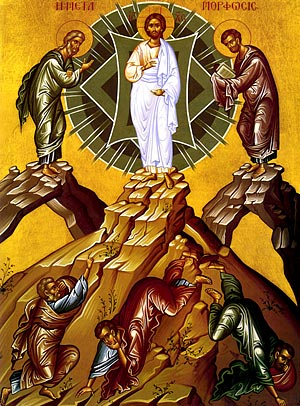
“The analysis of a text ‘involved the investigation of the “story” presented in the text being studied,’ to historikon. Relating the historia concerning a text gave a narrative context that was necessary for understanding the point being made. When John Chrysostom explains the presence of Moses and Elijah at the Transfiguration, he reminds the reader of certain facts that make their significance patent. First, Jesus had been confused by the multitudes with Elijah and the prophets of old. The presence of all three at the Transfiguration makes clear the difference between ‘the servants and the Lord.’ John also mentions that Jesus had been accused of breaking the Law and making himself equal to God. The presence of Moses and Elijah clears Jesus of these charges, for Moses, who gave the Law, would not have stood with a transgressor, or Elijah, who ‘was jealous for the glory of God’ with a blasphemer. The task of interpretation for Chrysostom, then, involved relating what the reader must have in mind in order to understand a given text.”