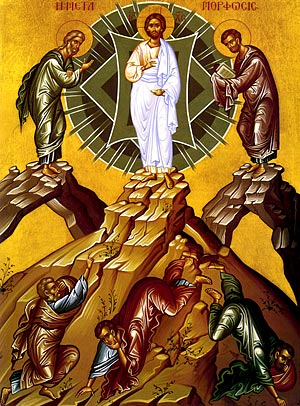
“The analysis of a text ‘involved the investigation of the “story” presented in the text being studied,’ to historikon. Relating the historia concerning a text gave a narrative context that was necessary for understanding the point being made. When John Chrysostom explains the presence of Moses and Elijah at the Transfiguration, he reminds the reader of certain facts that make their significance patent. First, Jesus had been confused by the multitudes with Elijah and the prophets of old. The presence of all three at the Transfiguration makes clear the difference between ‘the servants and the Lord.’ John also mentions that Jesus had been accused of breaking the Law and making himself equal to God. The presence of Moses and Elijah clears Jesus of these charges, for Moses, who gave the Law, would not have stood with a transgressor, or Elijah, who ‘was jealous for the glory of God’ with a blasphemer. The task of interpretation for Chrysostom, then, involved relating what the reader must have in mind in order to understand a given text.”
“Augustine locates the enterprise of theological reflection within the economy of redemption in three key ways. First, we can only understand the task the theologian faces by grasping something of the nature and purpose of the redemptive drama as a whole. Only when we see how that drama represents God’s speaking in the world so that we may no longer be subject to it and to its powers can we grasp the full task of attempting to talk of God. Second, Augustine’s conception of theological reflection is, more particularly, part of the Christian’s participation in the mystery of dying, rising, and ascending with Christ: only within this movement may the inner and the outer person be restored and the mind come to imagine God, as far as it may, without delusion or self-deceit. Third, the exegesis of Scripture provides the point of departure for the enterprise of Trinitarian theology and for the conjoint exercise of the rational powers that is central to that enterprise: but we can only come to see what is involved in reading this Scripture through seeing how that text fits within God’s overall redemptive economy. Only then may we see how the materialism of scriptural texts about the divine challenges us to move beyond the material and to begin to develop a grammar of divine distinction from the world—in Augustine’s case to begin to develop a grammar of divine simplicity—in order to secure God’s fully Trinitarian nature. Thus, struggling to apply the grammar of simplicity to the Triune God plays, for Augustine, a small part in the movement of the human being, in Christ, towards God as the creator and source of all wisdom and power and truth.”
It all comes down to nature and grace. If your understanding of nature and grace is wrong it will affect your entire theology. Case in point is the Protestant doctrine of “total depravity.” This doctrine leads them to have a fundamentally wrong understanding of Soteriology (among other things). God does not just declare us righteous as a judge in the courtroom. We do not gain a mere legal status. Rather, when God declares us righteous, we actually become righteous. We do not gain a legal status, but adoption into the Familia Dei, the Family of God. Because of our baptism, we can truly call God “Father” as Jesus taught us to do. We must always remember that grace does not destroy nature, but elevates, heals and perfects it. The Protestant understanding of imputed righteousness denies the power of God’s grace. The logical consequence of the doctrine says that God is not powerful enough to bring about an ontological change in the justified man (not that the nature itself changes, a justified man is still a man, but his nature is perfected in Christ. The Protestant understanding would not have it so). Here is a great summation of nature and grace by John Haas:
“The saeculum, or the natural order, is distinct from the spiritual order but it is not separated from it and is certainly not opposed to it. One of the errors that arouse in much Protestant thought, and persists to our own day even in secular culture, is that the natural and supernatural orders are opposed to one another. Because of the doctrine of the total depravity of man, classical Protestantism tends to look at fallen man as radically over against God. In the classical Protestant theory of justification, man is never truly made righteous. God merely regards him as righteous by virtue of the saving actions of Jesus Christ performed on his behalf. Man is treated by God only as though he were righteous, that is, he has righteousness imputed to him. Man remains a depraved sinner even as he is justified, which is the Protestant doctrine of simul Justus et peccator, that is, one is justified, treated as just, even though he remains a sinner.
As a result of this erroneous thinking, there has developed in the general Protestant/secular culture the perception that nature and grace, nature and supernature, the profane and the sacred, the secular and the religious are opposed to one another. While this mistaken thinking has profoundly influenced even some Catholic thinkers, it is a notion that is profoundly un-Catholic. Even though an infinite gap separates the Creator from the creature, as articulated in the thought of Saint Thomas, they are not in opposition to one another.
The saeculum, or the natural order, is distinct from the spiritual, but it is not separated from it. In the hierarchy of being, the natural order is ordered toward the supernatural so that it never loses any of its own proper, distinct, and unique created essence, derived from the Creator itself.”
"Religious symbols are used by Augustine to draw believers ever more intimately into the divine life. The liturgy thus becomes the locus deificandi, the place where the drama of human salvation is not only reenacted but effected. Surrounded by the temple of praise and all that is within, human persons are to see how God bids them to become his living signs. Gold, oil, trees, the altar of sacrifice, the Sabbath, and the laud Christians sing are all constituted to cultivate the full life of the baptized so as to draw them into a closer union with the divine, becoming gods by becoming God's."
“First, Paul’s strategic deployment of scriptural texts is profoundly contextual, taking into account both the near context and the larger narrative context from which he quotes.
Second, Paul’s exegesis is salvation-historical in orientation, meaning that the location of his OT allusions and citations within the entire arc of the biblical story of God’s redemption of his people is significant.
Third, Paul employs a typological methodology to correlate different texts, figures and events of salvation history in a theologically meaningful pattern. Thus Paul often cites in tandem thematically related texts from patriarchal and Israelite narratives (see Gal 3:6-9, 10-14; 4:21-31), inviting his readers to find significant elements of historical continuity in God’s dealings with his people. For example, by viewing the typological correlation of the Abrahamic and Israelite images in Galatians 4:21-31, it becomes clear that Paul (unlike many modern covenant theologians) does not explain the Old and New Covenants exclusively in temporal terms (i.e., before/after Christ). Instead, by linking the New Covenant with Abraham, and the Old Covenant with Moses, Paul shows how the new surpasses the old precisely because it preceded it, in view of the promise and oath that God pledged to Abraham.
Fourth, Paul argues in a teleological style. In other words, he deploys OT citations and allusions earlier in his discourse with a view to a certain endpoint or telos, that is, a scriptural argument or conclusion introduced only later or at the end of his discourse. For example, the typological interpretation of Genesis 16-21 in Galatians 4:21-31 forms a certain climax of Paul’s argument in Galatians, shedding light on the scriptural citations employed earlier. Thus, interpreters need to read Paul’s arguments in both directions, since later portions shed light on earlier ones, and vice versa.”
“By an appropriate contemplation of the text, the philosophy hidden in its words [may] become manifest, once the literal meaning has been purified by a correct understanding. Paul somewhere calls the shift from the corporeal to the spiritual ‘a turning to the Lord and the removal of a veil.’ In all these different expressions and names of contemplation Paul is teaching us an important lesson: we must pass to a spiritual and intelligent investigation of Scripture so that consideration of the merely human element might be changed into something perceived by the mind…We know that even the Word himself, who is adored by all the creation, passed on the divine mysteries when he had assumed the likeness of a man. He reveals to us the meaning of the law…Christ trained his disciples’ minds through sayings veiled and hidden in parables, images, obscure words, and terse sayings in riddles.”
-Gregory of Nyssa, Commentary on the Song of Songs.
“Alongside ‘grammatical’ techniques early Christians used ‘figural’ reading practices (Dawson 2002). David Dawson has helped us to see how Christian figural techniques describe relationships between one scriptural text (usually from the Old Testament) and an aspect of the incarnate Word’s mission as described in the New Testament, using the former to inform a reading of the latter. Thus, for example, the relationship between the soul and God; the details of the life of Moses could be used as an allegorical resource for describing the stages of the Christian life. The phrase ‘an aspect of the incarnate Word’s mission’ used above requires further discussion. For early Christian readers the progress of purification or sanctification that constitutes Christian life is intrinsically connected to the life, activity and purpose of Christ, the incarnate Word. The ‘mystery’ of the incarnation includes the ‘mystery’ by which members of the Christian community are united to the person of Christ and purified towards the vision of God. Using a text from the Old Testament to illustrate the course and struggles of this mystery is of a piece with using Old Testament texts to illustrate Christ’s actions and life. The figural reader seeks figures within the text both to understand the incarnate Word and to participate in the divine speech and action in creation.”