“Five independent lines of evidence ---the motions of the galaxies, the discovery of the primordial fireball, the laws of thermodynamics, the abundance of helium in the Universe and the life story of the stars--- point to one conclusion; all indicate that the Universe had a beginning. In the past, a few scientists bit the bullet and dared to ask, ‘What came before the beginning?’ Edmund Whittaker, a British physicist, wrote on religion and the new astronomy called The Beginning and the End of the World in which he said, ‘There is no ground for supposing that matter and energy existed before and was suddenly galvanized into action. For what could distinguish that moment from all other moments in eternity?’ Whittaker concluded, ‘It is simpler to postulate creation ex nihilo---Divine will constituting Nature from nothingness.’ Some scientists were even bolder, and asked ‘Who was the Prime Mover?’ The British theorist, Edward Milne, wrote a mathematical treatise on relativity which concluded by saying, ‘As to the first cause of the Universe, in the context of expansion, that is left for the reader to insert, but our picture is incomplete without Him.’
But the views of most physicists and astronomers remained closer to that of Saint Augustine, who, asking himself what God was doing before he made Heaven and Earth, gave the reply, ‘He was creating Hell for people who asked questions like that.’ In fact, some prominent scientists began to feel the same irritation over the expanding Universe that Einstein had expressed earlier. Eddington wrote in 1931, ‘I have no axe to grind in this discussion,’ but ‘the notion of a beginning is repugnant to me…I simply do not believe that the present order of things started off with a bang…the expanding Universe is preposterous…incredible…it leaves me cold.’ The German chemist, Walter Nernst, wrote, ‘To deny the infinite duration of time would be to betray the very foundations of science.’ Phillip Morrison of MIT said in a BBC film on cosmology, ‘I find it hard to accept the Big Bang theory; I would like to reject it.’ And Allan Sandage of the Carnegie Observatories, who established the uniformity of the expansion of the Universe out to nearly ten billion light years, said, ‘It is such a strange conclusion…it cannot really be true.’ (The italics are mine.)
There is a strange ring of feeling and emotion in these reactions. They come from the heart, whereas you would expect the judgments to come from the brain. Why? I think part of the answer is that scientists cannot bear the thought of a natural phenomenon which cannot be explained, even with unlimited time and money. There is a kind of religion in science; it is the religion of a person who believes there is order and harmony in the Universe. Every event can be explained in a rational way as the product of some previous event; every effect must have its cause; there is no First Cause. Einstein wrote, ‘The scientist is possessed by the sense of universal causation.’
This religious faith of the scientist is violated by the discovery that the world had a beginning under conditions in which the known laws of physics are not valid, and as a product of forces or circumstances we cannot discover. When that happens, the scientist has lost control. If he really examines the implications, he would be traumatized. As usual when faced with trauma, the mind reacts by ignoring the implications---in science this is known as ‘refusing to speculate’---or trivializing the origin of the world by calling it the Big Bang, as if the Universe were a firecracker.
Consider the enormity of the problem. Science has proven that the Universe exploded into being at a certain moment. It asks, What cause produced this effect? Who or what put the matter and energy into the Universe? Was the Universe created out of nothing, or was it gathered together out of pre-existing materials? And science cannot answer these questions, because, according to the astronomers, in the first moments of its existence the Universe was compressed to an extraordinary degree, and consumed by the heat of a fire beyond human imagination.
The shock of that instant must have destroyed every particle of evidence that could have yielded a clue to the cause of the great explosion. An entire world, rich in structure and history, may have existed before our Universe appeared; but if it did, science cannot tell what kind of world it was. A sound explanation may exist for the explosive birth of our Universe; but if it does, science cannot find out what the explanation is. The scientist’s pursuit of the past ends in the moment of creation.
This is an exceedingly strange development, unexpected by all but the theologians. They have always accepted the word of the Bible: In the beginning God created heaven and earth. To which St. Augustine added, ‘Who can understand this mystery or explain it to others?’ The development is unexpected because science has had such extraordinary success in tracing the chain of cause and effect backward in time. We have been able to connect the appearance of man on this planet to the crossing of the threshold of life on the earth, the manufacture of the chemical ingredients of life within stars that have long since expired, the formation of those stars out of the primal mists, and the expansion and cooling of the parent cloud of gases out of the cosmic fireball.
Now we would like to pursue that inquiry farther back in time, but the barrier to further progress seems insurmountable. It is not a matter of another year, another decade of work, another measurement, or another theory; at this moment it seems as though science will never be able to raise the curtain on the mystery of creation. For the scientist who has lived by his faith in the power of reason, the story ends like a bad dream. He has scaled the mountains of ignorance; he is about to conquer the highest peak; as he pulls himself over the final rock, he is greeted by a band of theologians who have been sitting there for centuries.”
-Robert Jastrow in God and the Astronomers.
Sunday, July 29, 2007

Saturday, July 21, 2007
Whether Sacraments Are Necessary For Man's Salvation?
Objection 1: It seems that sacraments are not necessary for man's salvation. For the Apostle says (1 Tim. 4:8): "Bodily exercise is profitable to little." But the use of sacraments pertains to bodily exercise; because sacraments are perfected in the signification of sensible things and words, as stated above (Q[60], A[6]). Therefore sacraments are not necessary for the salvation of man.
Objection 2: Further, the Apostle was told (2 Cor. 12:9): "My grace is sufficient for thee." But it would not suffice if sacraments were necessary for salvation. Therefore sacraments are not necessary for man's salvation.
Objection 3: Further, given a sufficient cause, nothing more seems to be required for the effect. But Christ's Passion is the sufficient cause of our salvation; for the Apostle says (Rom. 5:10): "If, when we were enemies, we were reconciled to God by the death of His Son: much more, being reconciled, shall we be saved by His life." Therefore sacraments are not necessary for man's salvation.
On the contrary, Augustine says (Contra Faust. xix): "It is impossible to keep men together in one religious denomination, whether true or false, except they be united by means of visible signs or sacraments." But it is necessary for salvation that men be united together in the name of the one true religion. Therefore sacraments are necessary for man's salvation.
I answer that, Sacraments are necessary unto man's salvation for three reasons. The first is taken from the condition of human nature which is such that it has to be led by things corporeal and sensible to things spiritual and intelligible. Now it belongs to Divine providence to provide for each one according as its condition requires. Divine wisdom, therefore, fittingly provides man with means of salvation, in the shape of corporeal and sensible signs that are called sacraments.
The second reason is taken from the state of man who in sinning subjected himself by his affections to corporeal things. Now the healing remedy should be given to a man so as to reach the part affected by disease. Consequently it was fitting that God should provide man with a spiritual medicine by means of certain corporeal signs; for if man were offered spiritual things without a veil, his mind being taken up with the material world would be unable to apply itself to them.
The third reason is taken from the fact that man is prone to direct his activity chiefly towards material things. Lest, therefore, it should be too hard for man to be drawn away entirely from bodily actions, bodily exercise was offered to him in the sacraments, by which he might be trained to avoid superstitious practices, consisting in the worship of demons, and all manner of harmful action, consisting in sinful deeds.
It follows, therefore, that through the institution of the sacraments man, consistently with his nature, is instructed through sensible things; he is humbled, through confessing that he is subject to corporeal things, seeing that he receives assistance through them: and he is even preserved from bodily hurt, by the healthy exercise of the sacraments.
Reply to Objection 1: Bodily exercise, as such, is not very profitable: but exercise taken in the use of the sacraments is not merely bodily, but to a certain extent spiritual, viz. in its signification and in its causality.
Reply to Objection 2: God's grace is a sufficient cause of man's salvation. But God gives grace to man in a way which is suitable to him. Hence it is that man needs the sacraments that he may obtain grace.
Reply to Objection 3: Christ's Passion is a sufficient cause of man's salvation. But it does not follow that the sacraments are not also necessary for that purpose: because they obtain their effect through the power of Christ's Passion; and Christ's Passion is, so to say, applied to man through the sacraments according to the Apostle (Rom. 6:3): "All we who are baptized in Christ Jesus, are baptized in His death."
Objection 2: Further, the Apostle was told (2 Cor. 12:9): "My grace is sufficient for thee." But it would not suffice if sacraments were necessary for salvation. Therefore sacraments are not necessary for man's salvation.
Objection 3: Further, given a sufficient cause, nothing more seems to be required for the effect. But Christ's Passion is the sufficient cause of our salvation; for the Apostle says (Rom. 5:10): "If, when we were enemies, we were reconciled to God by the death of His Son: much more, being reconciled, shall we be saved by His life." Therefore sacraments are not necessary for man's salvation.
On the contrary, Augustine says (Contra Faust. xix): "It is impossible to keep men together in one religious denomination, whether true or false, except they be united by means of visible signs or sacraments." But it is necessary for salvation that men be united together in the name of the one true religion. Therefore sacraments are necessary for man's salvation.
I answer that, Sacraments are necessary unto man's salvation for three reasons. The first is taken from the condition of human nature which is such that it has to be led by things corporeal and sensible to things spiritual and intelligible. Now it belongs to Divine providence to provide for each one according as its condition requires. Divine wisdom, therefore, fittingly provides man with means of salvation, in the shape of corporeal and sensible signs that are called sacraments.
The second reason is taken from the state of man who in sinning subjected himself by his affections to corporeal things. Now the healing remedy should be given to a man so as to reach the part affected by disease. Consequently it was fitting that God should provide man with a spiritual medicine by means of certain corporeal signs; for if man were offered spiritual things without a veil, his mind being taken up with the material world would be unable to apply itself to them.
The third reason is taken from the fact that man is prone to direct his activity chiefly towards material things. Lest, therefore, it should be too hard for man to be drawn away entirely from bodily actions, bodily exercise was offered to him in the sacraments, by which he might be trained to avoid superstitious practices, consisting in the worship of demons, and all manner of harmful action, consisting in sinful deeds.
It follows, therefore, that through the institution of the sacraments man, consistently with his nature, is instructed through sensible things; he is humbled, through confessing that he is subject to corporeal things, seeing that he receives assistance through them: and he is even preserved from bodily hurt, by the healthy exercise of the sacraments.
Reply to Objection 1: Bodily exercise, as such, is not very profitable: but exercise taken in the use of the sacraments is not merely bodily, but to a certain extent spiritual, viz. in its signification and in its causality.
Reply to Objection 2: God's grace is a sufficient cause of man's salvation. But God gives grace to man in a way which is suitable to him. Hence it is that man needs the sacraments that he may obtain grace.
Reply to Objection 3: Christ's Passion is a sufficient cause of man's salvation. But it does not follow that the sacraments are not also necessary for that purpose: because they obtain their effect through the power of Christ's Passion; and Christ's Passion is, so to say, applied to man through the sacraments according to the Apostle (Rom. 6:3): "All we who are baptized in Christ Jesus, are baptized in His death."
Whether The Will Is Moved Of Necessity By The Exterior Mover Which Is God?
Objection 1: It would seem that the will is moved of necessity by God. For every agent that cannot be resisted moves of necessity. But God cannot be resisted, because His power is infinite; wherefore it is written (Rom. 9:19): "Who resisteth His will?" Therefore God moves the will of necessity.
Objection 2: Further, the will is moved of necessity to whatever it wills naturally, as stated above (A[2], ad 3). But "whatever God does in a thing is natural to it," as Augustine says (Contra Faust. xxvi, 3). Therefore the will wills of necessity everything to which God moves it.
Objection 3: Further, a thing is possible, if nothing impossible follows from its being supposed. But something impossible follows from the supposition that the will does not will that to which God moves it: because in that case God's operation would be ineffectual. Therefore it is not possible for the will not to will that to which God moves it. Therefore it wills it of necessity.
On the contrary, It is written (Ecclus. 15:14): "God made man from the beginning, and left him in the hand of his own counsel." Therefore He does not of necessity move man's will.
I answer that, As Dionysius says (Div. Nom. iv) "it belongs to Divine providence, not to destroy but to preserve the nature of things." Wherefore it moves all things in accordance with their conditions; so that from necessary causes through the Divine motion, effects follow of necessity; but from contingent causes, effects follow contingently. Since, therefore, the will is an active principle, not determinate to one thing, but having an indifferent relation to many things, God so moves it, that He does not determine it of necessity to one thing, but its movement remains contingent and not necessary, except in those things to which it is moved naturally.
Reply to Objection 1: The Divine will extends not only to the doing of something by the thing which He moves, but also to its being done in a way which is fitting to the nature of that thing. And therefore it would be more repugnant to the Divine motion, for the will to be moved of necessity, which is not fitting to its nature; than for it to be moved freely, which is becoming to its nature.
Reply to Objection 2: That is natural to a thing, which God so works in it that it may be natural to it: for thus is something becoming to a thing, according as God wishes it to be becoming. Now He does not wish that whatever He works in things should be natural to them, for instance, that the dead should rise again. But this He does wish to be natural to each thing---that it be subject to the Divine power.
Reply to Objection 3: If God moves the will to anything, it is incompatible with this supposition, that the will be not moved thereto. But it is not impossible simply. Consequently it does not follow that the will is moved by God necessarily.
-St. Thomas Aquinas in the Summa Theologica, Prima Secunda, Q. 10, a. 4.
Objection 2: Further, the will is moved of necessity to whatever it wills naturally, as stated above (A[2], ad 3). But "whatever God does in a thing is natural to it," as Augustine says (Contra Faust. xxvi, 3). Therefore the will wills of necessity everything to which God moves it.
Objection 3: Further, a thing is possible, if nothing impossible follows from its being supposed. But something impossible follows from the supposition that the will does not will that to which God moves it: because in that case God's operation would be ineffectual. Therefore it is not possible for the will not to will that to which God moves it. Therefore it wills it of necessity.
On the contrary, It is written (Ecclus. 15:14): "God made man from the beginning, and left him in the hand of his own counsel." Therefore He does not of necessity move man's will.
I answer that, As Dionysius says (Div. Nom. iv) "it belongs to Divine providence, not to destroy but to preserve the nature of things." Wherefore it moves all things in accordance with their conditions; so that from necessary causes through the Divine motion, effects follow of necessity; but from contingent causes, effects follow contingently. Since, therefore, the will is an active principle, not determinate to one thing, but having an indifferent relation to many things, God so moves it, that He does not determine it of necessity to one thing, but its movement remains contingent and not necessary, except in those things to which it is moved naturally.
Reply to Objection 1: The Divine will extends not only to the doing of something by the thing which He moves, but also to its being done in a way which is fitting to the nature of that thing. And therefore it would be more repugnant to the Divine motion, for the will to be moved of necessity, which is not fitting to its nature; than for it to be moved freely, which is becoming to its nature.
Reply to Objection 2: That is natural to a thing, which God so works in it that it may be natural to it: for thus is something becoming to a thing, according as God wishes it to be becoming. Now He does not wish that whatever He works in things should be natural to them, for instance, that the dead should rise again. But this He does wish to be natural to each thing---that it be subject to the Divine power.
Reply to Objection 3: If God moves the will to anything, it is incompatible with this supposition, that the will be not moved thereto. But it is not impossible simply. Consequently it does not follow that the will is moved by God necessarily.
-St. Thomas Aquinas in the Summa Theologica, Prima Secunda, Q. 10, a. 4.
Quote Of The Day
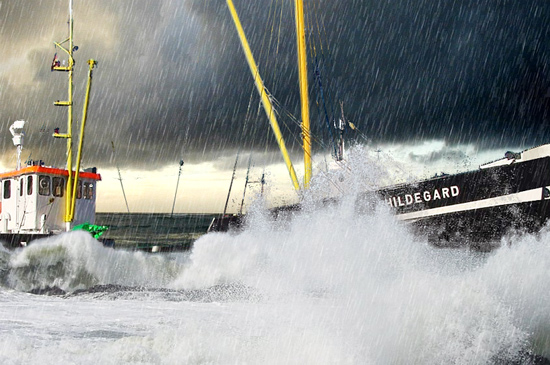
"There is no storm that can shipwreck the most sweet heart of Mary. When you see the squall coming, if you seek safety in the firm refuge that is Mary, there will be no danger of your being hauled off course or going down."
-St. Josemaria Escriva, founder of Opus Dei.



-St. Josemaria Escriva, founder of Opus Dei.

Friday, July 20, 2007
Quote Of The Day
"For me, theology is the attempt to get to know the Beloved better."
-Pope Benedict XVI
-Pope Benedict XVI
Thursday, July 19, 2007
God Is Love
"In order to incline our will to fulfill exactly the will of God and to promote His glory, let us remember that He has set the example by loving and honoring us in a thousand different ways. He created us out of nothing, after His own likeness, and He subordinated all other things to our use. In our redemption He passed by the most brilliant angel to choose His only Son, Who paid the price of the world, not with perishable gold or silver, but with His sacred blood in a death as cruel as it was wretched. He continually guards us from the fury of our enemies, He fights for us with His grace, and, to nourish and strengthen us, He is always ready to feed us with the precious body of His Son in the sacrament of the Altar. Do not these constitute convincing proofs of God’s tremendous love for us? Who can understand the immensity of His love for such wretched creatures? What should be our gratitude towards so generous a benefactor! If the great men of the world think they are obliged to do something in return for the respect paid them, even by those inferior as to position and wealth, what return ought not the very worms of the earth make when honored with such remarkable love and esteem by the sovereign Lord of the Universe? In particular, we must never forget that His majesty is infinitely worthy of our service, a service motivated by a single principle of love, whose only object is His will and desire."
-Lawrence Scupoli in The Spiritual Combat.
-Lawrence Scupoli in The Spiritual Combat.
Wednesday, July 18, 2007
Lawmakers Present Proposal To Proclaim Christ King Of Poland
Forty six Polish lawmakers signed a proposal last week that would proclaim Christ as King of Poland. The idea is being promoted by the League of Polish Families, the Law and Justice Party, and the Party of Farm Workers.
Representative Artur Gorski of the Law and Justice Party is leading the initiative. “We want Jesus Christ to be named king of the Poles,” he said, adding that, “More than ever Poland needs leadership and divine help to face new times. Some may mock our proposal, but for me it is a question of religious sensibility and political respect,” Gorski said in an interview with the Polish daily Gazeta Wyborcza.
He said he was hopeful the Church would support the measure. “All I can say is that since I first spoke of this idea I have received nine thousand letters of support,” he stated.
350 years ago King John II Casmir proclaimed the Virgin Mary as Perpetual Queen of Poland.
The president of the Congress, Marek Jurek said, “Before debating anything we need to know what the Church thinks.” [Source]
Representative Artur Gorski of the Law and Justice Party is leading the initiative. “We want Jesus Christ to be named king of the Poles,” he said, adding that, “More than ever Poland needs leadership and divine help to face new times. Some may mock our proposal, but for me it is a question of religious sensibility and political respect,” Gorski said in an interview with the Polish daily Gazeta Wyborcza.
He said he was hopeful the Church would support the measure. “All I can say is that since I first spoke of this idea I have received nine thousand letters of support,” he stated.
350 years ago King John II Casmir proclaimed the Virgin Mary as Perpetual Queen of Poland.
The president of the Congress, Marek Jurek said, “Before debating anything we need to know what the Church thinks.” [Source]
Monday, July 16, 2007
Whether God Loves All Things?
Objection 1: It seems that God does not love all things. For according to Dionysius (Div. Nom. iv, 1), love places the lover outside himself, and causes him to pass, as it were, into the object of his love. But it is not admissible to say that God is placed outside of Himself, and passes into other things. Therefore it is inadmissible to say that God loves things other than Himself.
Objection 2: Further, the love of God is eternal. But things apart from God are not from eternity; except in God. Therefore God does not love anything, except as it exists in Himself. But as existing in Him, it is no other than Himself. Therefore God does not love things other than Himself.
Objection 3: Further, love is twofold---the love, namely, of desire, and the love of friendship. Now God does not love irrational creatures with the love of desire, since He needs no creature outside Himself. Nor with the love of friendship; since there can be no friendship with irrational creatures, as the Philosopher shows (Ethic. viii, 2). Therefore God does not love all things.
Objection 4: Further, it is written (Ps. 5:7): "Thou hatest all the workers of iniquity." Now nothing is at the same time hated and loved. Therefore God does not love all things.
On the contrary, It is said (Wis. 11:25): "Thou lovest all things that are, and hatest none of the things which Thou hast made."
I answer that, God loves all existing things. For all existing things, in so far as they exist, are good, since the existence of a thing is itself a good; and likewise, whatever perfection it possesses. Now it has been shown above (Q[19], A[4]) that God's will is the cause of all things. It must needs be, therefore, that a thing has existence, or any kind of good, only inasmuch as it is willed by God. To every existing thing, then, God wills some good. Hence, since to love anything is nothing else than to will good to that thing, it is manifest that God loves everything that exists. Yet not as we love. Because since our will is not the cause of the goodness of things, but is moved by it as by its object, our love, whereby we will good to anything, is not the cause of its goodness; but conversely its goodness, whether real or imaginary, calls forth our love, by which we will that it should preserve the good it has, and receive besides the good it has not, and to this end we direct our actions: whereas the love of God infuses and creates goodness.
Reply to Objection 1: A lover is placed outside himself, and made to pass into the object of his love, inasmuch as he wills good to the beloved; and works for that good by his providence even as he works for his own. Hence Dionysius says (Div. Nom. iv, 1): "On behalf of the truth we must make bold to say even this, that He Himself, the cause of all things, by His abounding love and goodness, is placed outside Himself by His providence for all existing things."
Reply to Objection 2: Although creatures have not existed from eternity, except in God, yet because they have been in Him from eternity, God has known them eternally in their proper natures; and for that reason has loved them, even as we, by the images of things within us, know things existing in themselves.
Reply to Objection 3: Friendship cannot exist except towards rational creatures, who are capable of returning love, and communicating one with another in the various works of life, and who may fare well or ill, according to the changes of fortune and happiness; even as to them is benevolence properly speaking exercised. But irrational creatures cannot attain to loving God, nor to any share in the intellectual and beatific life that He lives. Strictly speaking, therefore, God does not love irrational creatures with the love of friendship; but as it were with the love of desire, in so far as He orders them to rational creatures, and even to Himself. Yet this is not because He stands in need of them; but only on account of His goodness, and of the services they render to us. For we can desire a thing for others as well as for ourselves.
Reply to Objection 4: Nothing prevents one and the same thing being loved under one aspect, while it is hated under another. God loves sinners in so far as they are existing natures; for they have existence and have it from Him. In so far as they are sinners, they have not existence at all, but fall short of it; and this in them is not from God. Hence under this aspect, they are hated by Him.
-St. Thomas Aquinas, Summa Theologica Prima Pars, Q. 20, a. 2
Objection 2: Further, the love of God is eternal. But things apart from God are not from eternity; except in God. Therefore God does not love anything, except as it exists in Himself. But as existing in Him, it is no other than Himself. Therefore God does not love things other than Himself.
Objection 3: Further, love is twofold---the love, namely, of desire, and the love of friendship. Now God does not love irrational creatures with the love of desire, since He needs no creature outside Himself. Nor with the love of friendship; since there can be no friendship with irrational creatures, as the Philosopher shows (Ethic. viii, 2). Therefore God does not love all things.
Objection 4: Further, it is written (Ps. 5:7): "Thou hatest all the workers of iniquity." Now nothing is at the same time hated and loved. Therefore God does not love all things.
On the contrary, It is said (Wis. 11:25): "Thou lovest all things that are, and hatest none of the things which Thou hast made."
I answer that, God loves all existing things. For all existing things, in so far as they exist, are good, since the existence of a thing is itself a good; and likewise, whatever perfection it possesses. Now it has been shown above (Q[19], A[4]) that God's will is the cause of all things. It must needs be, therefore, that a thing has existence, or any kind of good, only inasmuch as it is willed by God. To every existing thing, then, God wills some good. Hence, since to love anything is nothing else than to will good to that thing, it is manifest that God loves everything that exists. Yet not as we love. Because since our will is not the cause of the goodness of things, but is moved by it as by its object, our love, whereby we will good to anything, is not the cause of its goodness; but conversely its goodness, whether real or imaginary, calls forth our love, by which we will that it should preserve the good it has, and receive besides the good it has not, and to this end we direct our actions: whereas the love of God infuses and creates goodness.
Reply to Objection 1: A lover is placed outside himself, and made to pass into the object of his love, inasmuch as he wills good to the beloved; and works for that good by his providence even as he works for his own. Hence Dionysius says (Div. Nom. iv, 1): "On behalf of the truth we must make bold to say even this, that He Himself, the cause of all things, by His abounding love and goodness, is placed outside Himself by His providence for all existing things."
Reply to Objection 2: Although creatures have not existed from eternity, except in God, yet because they have been in Him from eternity, God has known them eternally in their proper natures; and for that reason has loved them, even as we, by the images of things within us, know things existing in themselves.
Reply to Objection 3: Friendship cannot exist except towards rational creatures, who are capable of returning love, and communicating one with another in the various works of life, and who may fare well or ill, according to the changes of fortune and happiness; even as to them is benevolence properly speaking exercised. But irrational creatures cannot attain to loving God, nor to any share in the intellectual and beatific life that He lives. Strictly speaking, therefore, God does not love irrational creatures with the love of friendship; but as it were with the love of desire, in so far as He orders them to rational creatures, and even to Himself. Yet this is not because He stands in need of them; but only on account of His goodness, and of the services they render to us. For we can desire a thing for others as well as for ourselves.
Reply to Objection 4: Nothing prevents one and the same thing being loved under one aspect, while it is hated under another. God loves sinners in so far as they are existing natures; for they have existence and have it from Him. In so far as they are sinners, they have not existence at all, but fall short of it; and this in them is not from God. Hence under this aspect, they are hated by Him.
-St. Thomas Aquinas, Summa Theologica Prima Pars, Q. 20, a. 2
Sunday, July 15, 2007
You Think His Popular Work Is Great, You Should See His Academic Stuff!
The person I am referring to in the title is Dr. Scott Hahn. If you take theology seriously, then you will definitely want to check out the selection of his academic articles posted on the St. Paul Center for Biblical Theology's website.
Wednesday, July 11, 2007
Procrastination
While procrastinating from studying Greek, I came up with a list of my top five favorite theologians.
The list is as follows (I haven't committed to any particular order yet):
1) Thomas Aquinas
2) Matthias Scheeben
3) Reginald Garrigou-Lagrange
4) John Henry Newman
5) Joseph Ratzinger/ Benedict XVI
I don't know who would be the rest of my top 10. I'd have to procastinate some more to come up with the rest, but I must return to studying.
Anyways, check these guys out. They're incredible!
Also, if anyone has a copy of Scheeben's "Nature and Grace" that they want to sell for $40 or less, let me know!
The list is as follows (I haven't committed to any particular order yet):
1) Thomas Aquinas
2) Matthias Scheeben
3) Reginald Garrigou-Lagrange
4) John Henry Newman
5) Joseph Ratzinger/ Benedict XVI
I don't know who would be the rest of my top 10. I'd have to procastinate some more to come up with the rest, but I must return to studying.
Anyways, check these guys out. They're incredible!
Also, if anyone has a copy of Scheeben's "Nature and Grace" that they want to sell for $40 or less, let me know!
Subscribe to:
Posts (Atom)