Scott Hahn's Conversion Story
I just finished reading Scott Hahn's story of his conversion from being an anti-Catholic Presbyterian to becoming one of Catholicisms best defenders and theologians! I highly recommend it to everyone. Read it here!
Friday, December 30, 2005

Creed of St. Patrick
There is no other God,
nor ever was, nor will be,
than God the Father unbegotten,
without beginning,
from whom is all beginning,
the Lord of the universe,
as we have been taught;
and His son Jesus Christ,
whom we declare to have always
been with the Father, spiritually and
ineffably begotten by the Father
before the beginning of the world,
before all beginning;
and by Him are made all things
visible and invisible.
He was made man, and,
having defeated death,
was received into heaven by the Father;
and He hath given Him all
power over all names in heaven,
on earth, and under the earth,
and every tongue shall confess
to Him that Jesus Christ is Lord and God,
in whom we believe, and whose advent
we expect soon to be
,judge of the living and of the dead,
who will render to every man
according to his deeds; and
He has poured forth upon us
abundantly the Holy Spirit,
the gift and pledge of immortality,
who makes those who believe
and obey sons of God and
joint heirs with Christ;
and Him do we confess and adore,
one God in the Trinity of the Holy Name.
-St. Patrick, from his Confession.
There is no other God,
nor ever was, nor will be,
than God the Father unbegotten,
without beginning,
from whom is all beginning,
the Lord of the universe,
as we have been taught;
and His son Jesus Christ,
whom we declare to have always
been with the Father, spiritually and
ineffably begotten by the Father
before the beginning of the world,
before all beginning;
and by Him are made all things
visible and invisible.
He was made man, and,
having defeated death,
was received into heaven by the Father;
and He hath given Him all
power over all names in heaven,
on earth, and under the earth,
and every tongue shall confess
to Him that Jesus Christ is Lord and God,
in whom we believe, and whose advent
we expect soon to be
,judge of the living and of the dead,
who will render to every man
according to his deeds; and
He has poured forth upon us
abundantly the Holy Spirit,
the gift and pledge of immortality,
who makes those who believe
and obey sons of God and
joint heirs with Christ;
and Him do we confess and adore,
one God in the Trinity of the Holy Name.
-St. Patrick, from his Confession.
Saint Patrick's Breastplate
Christ be with me, Christ within me,
Christ behind me, Christ before me,
Christ beside me, Christ to win me,
Christ to comfort me and restore me,
Christ beneath me, Christ above me,
Christ in quiet, Christ in danger,
Christ in hearts of all that love me,
Christ in mouth of friend and stranger.
-St. Patrick
Christ be with me, Christ within me,
Christ behind me, Christ before me,
Christ beside me, Christ to win me,
Christ to comfort me and restore me,
Christ beneath me, Christ above me,
Christ in quiet, Christ in danger,
Christ in hearts of all that love me,
Christ in mouth of friend and stranger.
-St. Patrick
Top Ten Questions Catholics Are Asked
Question 10: Are Your Beliefs Found In The Bible?
*All Catholic beliefs can be found in the Bible in some form, whether plainly or by an indirect indication. It is not necessary for everything to be absolutely clear in Scripture alone, because that is not a teaching of Scripture itself. Scripture also points to an authoritative Church and Tradition, as St. Paul says in his Second Letter to the Thessalonians: "Stand firm and hold to the traditions which you were taught by us, either by word of mouth or by letter" (2 Thess 2:15-See also 1 Cor 11:2; 2 Thess 3:6; 2 Tim 1:13-14, 2:2). When the first Christians had a significant disagreement, they didn't simply open their Bibles (which didn't even exist at that point) to decide who was right; they held a council, which made binding decrees (Acts 15:1-29). The very books of the Bible had to be determined by the Church, and that didn't happen until the late fourth century. Therefore, Sacred Tradition and authority were necessary for us to even have a Bible today.
*Answers by Dave Armstrong
Question 10: Are Your Beliefs Found In The Bible?
*All Catholic beliefs can be found in the Bible in some form, whether plainly or by an indirect indication. It is not necessary for everything to be absolutely clear in Scripture alone, because that is not a teaching of Scripture itself. Scripture also points to an authoritative Church and Tradition, as St. Paul says in his Second Letter to the Thessalonians: "Stand firm and hold to the traditions which you were taught by us, either by word of mouth or by letter" (2 Thess 2:15-See also 1 Cor 11:2; 2 Thess 3:6; 2 Tim 1:13-14, 2:2). When the first Christians had a significant disagreement, they didn't simply open their Bibles (which didn't even exist at that point) to decide who was right; they held a council, which made binding decrees (Acts 15:1-29). The very books of the Bible had to be determined by the Church, and that didn't happen until the late fourth century. Therefore, Sacred Tradition and authority were necessary for us to even have a Bible today.
*Answers by Dave Armstrong
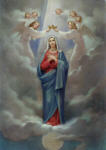
Mary: The New Ark Of The Covenant
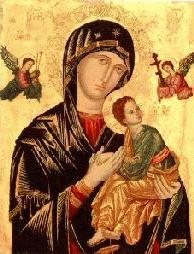
I've been listening to an audio-tape of Scott Hahn's lectures on The Revelation to John for a while now and tonight on my way home from work he was talking about chapters 11 and 12. He talked about how John saw the Ark of the Covenant in heaven and that the ark was Mary.
"Then God's temple in heaven was opened, and the ark of his covenant could be seen in the temple...A great sign appeared in the sky, a women clothed with the sun, with the moon under her feet, and on her head a crown of twelve stars. She was with child and wailed aloud in pain as she labored to give birth" (Rev 11:19-12:2).
He said that the original Ark of the Covenant held the Ten Commandments which were God's words. Likewise, Mary as the New Ark of the Covenant held inside her the Logos-the Eternal Word!
Mary was the vessel that carried God's new covenant. A covenant that was not only for Israel, but the whole world!
Hahn also mentioned parallels between the Ark of the Covenant and Mary in 2 Samuel and Luke.
For example in 2nd Samuel 6, David took a journey to the hill country of Judah with the Ark of the Covenant. Also, the same phrase is used to describe Mary's journey to the hill country. The same exact phrase is used. Both David and Mary, "arose and made the journey." In 2nd Samuel, 6:2 and Luke 1:39.
Then in 2 Samuel 6:9 David remarks "How shall the Ark of the Lord come to me?" Elizabeth also says in Luke 1:43 "Why should the Mother of the Lord come to me?"
The Ark of the Covenant stays with Obededom for three months in 2 Samuel. The exact amount of time that Mary stays with Elizabeth in Luke.
With all this in mind and also with the recent post of the "Top ten questions Catholics are asked": question 4, one can see why Mary is so revered. She is the Ark which bore the Word of God, Jesus Christ-God with us! She truly is the Ark of the New Covenant!
Blessed Mary, ever virgin, the Ark of the New Covenant, pray for us that we may take part in God's New Covenant with man; your son, our Lord and Savior Jesus Christ and live our lives according to His will so that we all may enter into His heavenly kingdom where He reigns at the right-hand of God the Father. Amen!
Thursday, December 29, 2005
Top Ten Questions Catholics Are Asked
Question 9: Why Do You Obey The Pope?
*Catholics believe that Jesus commissioned St. Peter as the first leader of the Church. Matthew's Gospel has the most direct biblical indication of the papacy: "And I tell you, you are Peter [meaning literally "Rock"], and on this rock I will build my church...I will give you the keys of the kingdom of heaven" (Mt 16:18-19). Based on this statement of Jesus himself, Peter is clearly portrayed in the New Testament as the leader of the disciples. A pope can make infallible, binding pronouncements under certain conditions. Infallibility doesn't mean that absolutely everything a pope says is free from error. All Christians believe that God protected Holy Scripture from error by means of inspiration, even though sinful, fallible men wrote it. We Catholics also believe that God the Holy Spirit protects His Church and its head from error (Jn 14:16) by means of infallibility, even though sinful, imperfect men are involved in it.
*Amswers by Dave Armstrong
Question 9: Why Do You Obey The Pope?
*Catholics believe that Jesus commissioned St. Peter as the first leader of the Church. Matthew's Gospel has the most direct biblical indication of the papacy: "And I tell you, you are Peter [meaning literally "Rock"], and on this rock I will build my church...I will give you the keys of the kingdom of heaven" (Mt 16:18-19). Based on this statement of Jesus himself, Peter is clearly portrayed in the New Testament as the leader of the disciples. A pope can make infallible, binding pronouncements under certain conditions. Infallibility doesn't mean that absolutely everything a pope says is free from error. All Christians believe that God protected Holy Scripture from error by means of inspiration, even though sinful, fallible men wrote it. We Catholics also believe that God the Holy Spirit protects His Church and its head from error (Jn 14:16) by means of infallibility, even though sinful, imperfect men are involved in it.
*Amswers by Dave Armstrong
Wednesday, December 28, 2005
Top Ten Questions Catholics Are Asked
Question 8: Why Do You Call Your Priest "Father"?
*"And call no man your father on earth, for you have one Father, who is in heaven" (Mt 23:9). In this passage, Jesus is teaching that God the Father alone is ultimately the source of all authority. But He is not speaking absolutely, because if so, that would eliminate even biological fathers, the title "Church Fathers," the founding fathers of a country or organization, and so on. Jesus himself uses the term "father" in Matthew (15:4-5; 19:5, 19; 21:31), John (8:56), and several other places. In the parable of the Rich Man and Lazarus, Jesus actually presents Lazarus as using the address "Father Abraham" twice (Lk 16:24, 30- See also Acts 7:2; Rom 4:12; Jas 2:21). St. Paul also uses the term when he writes, "I became your father in Christ Jesus through the gospel" (1 Cor 4:15- See also 1 Cor 4:14-16), and refers to "our forefather Isaac" (Rom 9:10).
*Answers by Dave Armstrong
Question 8: Why Do You Call Your Priest "Father"?
*"And call no man your father on earth, for you have one Father, who is in heaven" (Mt 23:9). In this passage, Jesus is teaching that God the Father alone is ultimately the source of all authority. But He is not speaking absolutely, because if so, that would eliminate even biological fathers, the title "Church Fathers," the founding fathers of a country or organization, and so on. Jesus himself uses the term "father" in Matthew (15:4-5; 19:5, 19; 21:31), John (8:56), and several other places. In the parable of the Rich Man and Lazarus, Jesus actually presents Lazarus as using the address "Father Abraham" twice (Lk 16:24, 30- See also Acts 7:2; Rom 4:12; Jas 2:21). St. Paul also uses the term when he writes, "I became your father in Christ Jesus through the gospel" (1 Cor 4:15- See also 1 Cor 4:14-16), and refers to "our forefather Isaac" (Rom 9:10).
*Answers by Dave Armstrong
Tuesday, December 27, 2005
Top Ten Questions Catholics Are Asked
Question 7: Why Do You Pray For The Dead?
*The Bible clearly teaches the rightness of prayers for the dead in 2 Maccabees (12:40, 42, 44-45): "Then under the tunic of every one of the dead they found sacred tokens of idols of Jamnia, which the law forbids Jews to wear. And it became clear to all that this was why these men had fallen...[A]nd they turned to prayer, beseeching that the sin which had been committed might be wholly blotted out...For if he were not expecting that those who had fallen would rise again, it would have been superfluous and foolish to pray for the dead...[H]e made atonement for the dead, that they might be delivered from their sin." St. Paul teaches this in a similar way: "Otherwise, what do people mean by being baptized on behalf of the dead? If the dead are not raised at all, why are people baptized on their behalf?" (1 Cor 15:29). This indicates prayer and fasting for the dead. The word baptism often symbolically refers to penances (Mk 10:38-39; Lk 3:16, 12:50). The apostle Paul also appears to be praying for a dead person, Onesiphorus, in 2 Timothy (1:16-18).
*Answers by Dave Armstrong
Question 7: Why Do You Pray For The Dead?
*The Bible clearly teaches the rightness of prayers for the dead in 2 Maccabees (12:40, 42, 44-45): "Then under the tunic of every one of the dead they found sacred tokens of idols of Jamnia, which the law forbids Jews to wear. And it became clear to all that this was why these men had fallen...[A]nd they turned to prayer, beseeching that the sin which had been committed might be wholly blotted out...For if he were not expecting that those who had fallen would rise again, it would have been superfluous and foolish to pray for the dead...[H]e made atonement for the dead, that they might be delivered from their sin." St. Paul teaches this in a similar way: "Otherwise, what do people mean by being baptized on behalf of the dead? If the dead are not raised at all, why are people baptized on their behalf?" (1 Cor 15:29). This indicates prayer and fasting for the dead. The word baptism often symbolically refers to penances (Mk 10:38-39; Lk 3:16, 12:50). The apostle Paul also appears to be praying for a dead person, Onesiphorus, in 2 Timothy (1:16-18).
*Answers by Dave Armstrong
Top Ten Questions Catholics Are Asked
Question 6: Why Do You Pray To Idols (Statues)?
*No Catholic who knows anything about the Catholic faith has ever worshipped a statue (as in pagan idolatry). If we cherish the memory of mere political heroes with statues, and that of war heroes with monuments, then there can be no objection to honoring saints and righteous men and women: "Honor all men. Love the brotherhood. Fear God. Honor the emporer" (1 Pet 2:17- See also Rom 12:10; Heb 12:22-23). Statues are simply a visual reminder of great saints and heroes of the faith (Heb 11), who are more alive than we are (2 Cor 3:18), as is evident by their praying: "O Sovereign Lord...how long before thou dwell upon earth?" (Rev 6:10-See also Ps 35:17). The saints in heaven were never intended by God to be cut off from the Body of Christ on earth. They are involved in intercession, just as the saints on earth are, and they are described as "so great a cloud of witnesses" (Heb 12:1).
*Answers by Dave Armstrong
Question 6: Why Do You Pray To Idols (Statues)?
*No Catholic who knows anything about the Catholic faith has ever worshipped a statue (as in pagan idolatry). If we cherish the memory of mere political heroes with statues, and that of war heroes with monuments, then there can be no objection to honoring saints and righteous men and women: "Honor all men. Love the brotherhood. Fear God. Honor the emporer" (1 Pet 2:17- See also Rom 12:10; Heb 12:22-23). Statues are simply a visual reminder of great saints and heroes of the faith (Heb 11), who are more alive than we are (2 Cor 3:18), as is evident by their praying: "O Sovereign Lord...how long before thou dwell upon earth?" (Rev 6:10-See also Ps 35:17). The saints in heaven were never intended by God to be cut off from the Body of Christ on earth. They are involved in intercession, just as the saints on earth are, and they are described as "so great a cloud of witnesses" (Heb 12:1).
*Answers by Dave Armstrong
Sunday, December 25, 2005
Top Ten Questions Catholics Are Asked
Question 5: Why Do You Confess Your Sins To A Priest?
*Jesus Christ gave His disciples-and by extension, priests-the power not only to "loose" sins (that is, forgive in God's name), but also to "bind" (that is, impose penances): "Whatever you bind on earth shall be bound in heaven, and whatever you loose on earth shall be loosed in heaven" (Mt 18:18-See also Mt 16:19). "If you forgive the sins of any, they are forgiven; if you retain the sins of any, they are retained" (Jn 20:23). The priest serves as the representative of God and of His mercy. Confession gives new courage, confidence, and a fresh start. One learns humility by this practice, receives additional grace in order to avoid sin, and attains a certainty of forgiveness that is superior to mere feelings. Confession is also indicated in Matthew (3:5-6), Acts (19:18), and 1 John (1:9).
*Answers by Dave Armstrong
Question 5: Why Do You Confess Your Sins To A Priest?
*Jesus Christ gave His disciples-and by extension, priests-the power not only to "loose" sins (that is, forgive in God's name), but also to "bind" (that is, impose penances): "Whatever you bind on earth shall be bound in heaven, and whatever you loose on earth shall be loosed in heaven" (Mt 18:18-See also Mt 16:19). "If you forgive the sins of any, they are forgiven; if you retain the sins of any, they are retained" (Jn 20:23). The priest serves as the representative of God and of His mercy. Confession gives new courage, confidence, and a fresh start. One learns humility by this practice, receives additional grace in order to avoid sin, and attains a certainty of forgiveness that is superior to mere feelings. Confession is also indicated in Matthew (3:5-6), Acts (19:18), and 1 John (1:9).
*Answers by Dave Armstrong
Subscribe to:
Posts (Atom)