Whether God is altogether immutable?
Objection 1: It seems that God is not altogether immutable. For whatever moves itself is in some way mutable. But, as Augustine says (Gen. ad lit viii, 20), "The Creator Spirit moves Himself neither by time, nor by place." Therefore God is in some way mutable.
Objection 2: Further, it is said of Wisdom, that "it is more mobile than all things active [Vulg.'mobilior']" (Wis. 7:24). But God is wisdom itself; therefore God is movable.
Objection 3: Further, to approach and to recede signify movement. But these are said of God in Scripture, "Draw nigh to God and He will draw nigh to you" (James 4:8). Therefore God is mutable.
On the contrary, It is written, "I am the Lord, and I change not" (Malachi 3:6).
I answer that, From what precedes, it is shown that God is altogether immutable. First, because it was shown above that there is some first being, whom we call God; and that this first being must be pure act, without the admixture of any potentiality, for the reason that, absolutely, potentiality is posterior to act. Now everything which is in any way changed, is in some way in potentiality. Hence it is evident that it is impossible for God to be in any way changeable. Secondly, because everything which is moved, remains as it was in part, and passes away in part; as what is moved from whiteness to blackness, remains the same as to substance; thus in everything which is moved, there is some kind of composition to be found. But it has been shown above (Question [3], Article [7]) that in God there is no composition, for He is altogether simple. Hence it is manifest that God cannot be moved. Thirdly, because everything which is moved acquires something by its movement, and attains to what it had not attained previously. But since God is infinite, comprehending in Himself all the plenitude of perfection of all being, He cannot acquire anything new, nor extend Himself to anything whereto He was not extended previously. Hence movement in no way belongs to Him. So, some of the ancients, constrained, as it were, by the truth, decided that the first principle was immovable.
Reply to Objection 1: Augustine there speaks in a similar way to Plato, who said that the first mover moves Himself; calling every operation a movement, even as the acts of understanding, and willing, and loving, are called movements. Therefore because God understands and loves Himself, in that respect they said that God moves Himself, not, however, as movement and change belong to a thing existing in potentiality, as we now speak of change and movement.
Reply to Objection 2: Wisdom is called mobile by way of similitude, according as it diffuses its likeness even to the outermost of things; for nothing can exist which does not proceed from the divine wisdom by way of some kind of imitation, as from the first effective and formal principle; as also works of art proceed from the wisdom of the artist. And so in the same way, inasmuch as the similitude of the divine wisdom proceeds in degrees from the highest things, which participate more fully of its likeness, to the lowest things which participate of it in a lesser degree, there is said to be a kind of procession and movement of the divine wisdom to things; as when we say that the sun proceeds to the earth, inasmuch as the ray of light touches the earth. In this way Dionysius (Coel. Hier. i) expounds the matter, that every procession of the divine manifestation comes to us from the movement of the Father of light.
Reply to Objection 3: These things are said of God in Scripture metaphorically. For as the sun is said to enter a house, or to go out, according as its rays reach the house, so God is said to approach to us, or to recede from us, when we receive the influx of His goodness, or decline from Him.
-From Thomas Aquinas's Summa Theologica I.9.1
Thursday, April 06, 2006

Wednesday, April 05, 2006
Tuesday, April 04, 2006
Ashamed Alumnus
Today I read this article in the New York times about a "finding" done by a professor of my alma mater, and I am ashamed to call it so.
"In the night that followed the miracle of the loaves and fishes, as St. Mark tells the story in the New Testament, Jesus further astonished his disciples by walking on water.
It was a stormy night on the Sea of Galilee and the disciples were out in a boat, battling a contrary wind, when they saw Jesus approaching, as if a spirit. 'And he went up to them into the ship; and the wind ceased,' it is written in Mark 6:51. 'And they were sore amazed in themselves beyond measure, and wondered.'
Doron Nof also wondered, in a measured, scientific way. A professor of oceanography at Florida State University, he conducted an inquiry and found what might be a natural explanation: ice.
Writing in The Journal of Paleolimology, Dr. Nof and his colleagues point out that unusual freezing processes probably occurred in the region in the last 12,000 years, icing over parts of freshwater Galilee. This has not happened in recent history, but there were much colder stretches 1,500 to 2,500 years ago.
The scientists note that Galilee has warm, salty springs along the western shore, an area Jesus frequented. The water above the springs does not convect when it is cold. If air temperatures dipped below freezing, as sometimes happened then, surface ice could have formed thick enough to support human weight and inspire the biblical story.
From a distance, the scientists suggested, a person on the ice might appear to be walking on water, particularly if it had just rained and left a smoothed-out watery coating on the ice.
In a bow to biblical literalists and other skeptics, Dr. Nof's group concluded, 'Whether this happened or not is an issue for religion scholars, archaeologists, anthropologists and believers to decide on.'"
Notice that Nof (and I leave out 'Dr.' on purpose, because he doesn't deserve the title) doesn't mention anything about Peter falling into the water. I'm pretty sure that if there was ice, Peter would have known. Also, if there was ice, I wonder if Jesus had his ice skates on so he could walk across it without slipping.
Another thing to think of is that the some of the Apostles in the boat were Galilean fisherman. So they would be familiar with the Sea in which they fished. Don't you think they would have known that if the Sea iced over, they would not be able to take a boat across.
I wonder if Mr. Nof even thought about any of this before he started his research to disprove Jesus's miracle. Or if he went in with an anti-Christian bias and try to explain it away any way he could.
If my alma mater, Florida State, is going to regain any of it's credibility, it will fire Nof and make a statement dissociating itself with this man and his shoddy research.
Lastly, Nof says, "Whether this happened or not is an issue for religion scholars, archaeologists, anthropologists and believers to decide on."
Then why is an oceanographer trying to decide it?
Today I read this article in the New York times about a "finding" done by a professor of my alma mater, and I am ashamed to call it so.
"In the night that followed the miracle of the loaves and fishes, as St. Mark tells the story in the New Testament, Jesus further astonished his disciples by walking on water.
It was a stormy night on the Sea of Galilee and the disciples were out in a boat, battling a contrary wind, when they saw Jesus approaching, as if a spirit. 'And he went up to them into the ship; and the wind ceased,' it is written in Mark 6:51. 'And they were sore amazed in themselves beyond measure, and wondered.'
Doron Nof also wondered, in a measured, scientific way. A professor of oceanography at Florida State University, he conducted an inquiry and found what might be a natural explanation: ice.
Writing in The Journal of Paleolimology, Dr. Nof and his colleagues point out that unusual freezing processes probably occurred in the region in the last 12,000 years, icing over parts of freshwater Galilee. This has not happened in recent history, but there were much colder stretches 1,500 to 2,500 years ago.
The scientists note that Galilee has warm, salty springs along the western shore, an area Jesus frequented. The water above the springs does not convect when it is cold. If air temperatures dipped below freezing, as sometimes happened then, surface ice could have formed thick enough to support human weight and inspire the biblical story.
From a distance, the scientists suggested, a person on the ice might appear to be walking on water, particularly if it had just rained and left a smoothed-out watery coating on the ice.
In a bow to biblical literalists and other skeptics, Dr. Nof's group concluded, 'Whether this happened or not is an issue for religion scholars, archaeologists, anthropologists and believers to decide on.'"
Notice that Nof (and I leave out 'Dr.' on purpose, because he doesn't deserve the title) doesn't mention anything about Peter falling into the water. I'm pretty sure that if there was ice, Peter would have known. Also, if there was ice, I wonder if Jesus had his ice skates on so he could walk across it without slipping.
Another thing to think of is that the some of the Apostles in the boat were Galilean fisherman. So they would be familiar with the Sea in which they fished. Don't you think they would have known that if the Sea iced over, they would not be able to take a boat across.
I wonder if Mr. Nof even thought about any of this before he started his research to disprove Jesus's miracle. Or if he went in with an anti-Christian bias and try to explain it away any way he could.
If my alma mater, Florida State, is going to regain any of it's credibility, it will fire Nof and make a statement dissociating itself with this man and his shoddy research.
Lastly, Nof says, "Whether this happened or not is an issue for religion scholars, archaeologists, anthropologists and believers to decide on."
Then why is an oceanographer trying to decide it?
Be Not Afraid To Follow Christ
From FoxNews.com
VATICAN CITY — Pope Benedict XVI urged Catholics to look ahead, one year after the death of Pope John Paul II, saying they should heed the late pontiff's exhortation and not be afraid to follow Christ.
Benedict made the appeal during a solemn Mass attended by tens of thousands of people in St. Peter's Square to mark the first anniversary of John Paul's death. The Mass followed a candlelit vigil the night before, during which Benedict said John Paul's memory was still very much alive.
"This evening, our thoughts turn with emotion to the moment of the death of our beloved pontiff, but at the same time the heart, as it were, is urged to look forward," Benedict said in his homily.
He said the faithful should follow John Paul's repeated appeals to "go forward without fear on the path of being loyal to the Gospel and being witnesses to Christ in the third millennium."
Tens of thousands of people, including Italian politicians and actress Sophia Loren, attended the Mass. Two dozen cardinals celebrated the Mass, among them John Paul's longtime private secretary, recently elevated Cardinal Stanislaw Dziwisz of Krakow, Poland.
Dziwisz has been at the forefront in pushing for John Paul to be beatified — the first step to possible sainthood.
Benedict, who placed John Paul on the fast track for beatification, has been supporting the effort as well, highlighting in recent homilies the late pope's suffering — and on Monday, his faith.
"Those who were able to get close to him could almost touch with their hand his sound and solid faith," Benedict said in his homily.
"A convincing, strong and authentic faith, free of fear and compromise, which touched the hearts of so many people thanks to his many apostolic pilgrimages around the world and especially thanks to his last 'voyage,' which was his agony and his death."
The scene was far more solemn than the evening before, when the square twinkled with the lights of thousands of candles and fluttered with the red-and-white flags of John Paul's native Poland.
The square fell silent Sunday night at 9:37 p.m., the exact time of John Paul's death.
The Vatican's final anniversary event is scheduled for Thursday afternoon in St. Peter's, dedicated to the young people who were so important to John Paul.
From FoxNews.com
VATICAN CITY — Pope Benedict XVI urged Catholics to look ahead, one year after the death of Pope John Paul II, saying they should heed the late pontiff's exhortation and not be afraid to follow Christ.
Benedict made the appeal during a solemn Mass attended by tens of thousands of people in St. Peter's Square to mark the first anniversary of John Paul's death. The Mass followed a candlelit vigil the night before, during which Benedict said John Paul's memory was still very much alive.
"This evening, our thoughts turn with emotion to the moment of the death of our beloved pontiff, but at the same time the heart, as it were, is urged to look forward," Benedict said in his homily.
He said the faithful should follow John Paul's repeated appeals to "go forward without fear on the path of being loyal to the Gospel and being witnesses to Christ in the third millennium."
Tens of thousands of people, including Italian politicians and actress Sophia Loren, attended the Mass. Two dozen cardinals celebrated the Mass, among them John Paul's longtime private secretary, recently elevated Cardinal Stanislaw Dziwisz of Krakow, Poland.
Dziwisz has been at the forefront in pushing for John Paul to be beatified — the first step to possible sainthood.
Benedict, who placed John Paul on the fast track for beatification, has been supporting the effort as well, highlighting in recent homilies the late pope's suffering — and on Monday, his faith.
"Those who were able to get close to him could almost touch with their hand his sound and solid faith," Benedict said in his homily.
"A convincing, strong and authentic faith, free of fear and compromise, which touched the hearts of so many people thanks to his many apostolic pilgrimages around the world and especially thanks to his last 'voyage,' which was his agony and his death."
The scene was far more solemn than the evening before, when the square twinkled with the lights of thousands of candles and fluttered with the red-and-white flags of John Paul's native Poland.
The square fell silent Sunday night at 9:37 p.m., the exact time of John Paul's death.
The Vatican's final anniversary event is scheduled for Thursday afternoon in St. Peter's, dedicated to the young people who were so important to John Paul.
Monday, April 03, 2006
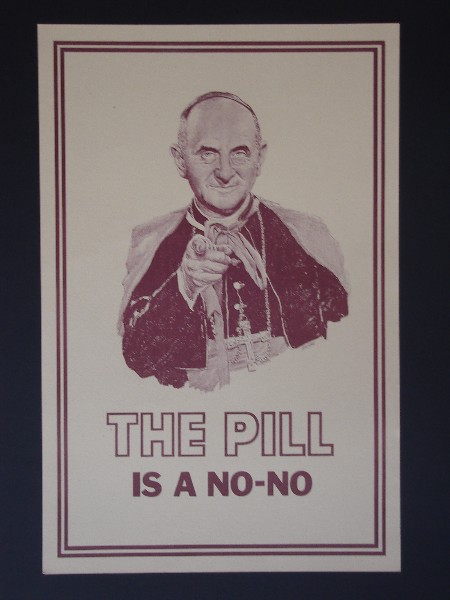
Two Key Threats To The Family
From Zenit.org
By Father Michael Hull
The family is the beginning and the basis of all human society. Thus has it been from creation: "Then the Lord God said: 'It is not good that the man should be alone; I will make him a helper fit for him'" (Genesis 2:18).
Aristotle has a sense of this when he describes the family as the fundamental community between men and women ("Politica" I.2). St. Augustine speaks of marriage as "the first natural bond of human society" ("De bono conjugali" 1.1).
Threats to the family are those that imperil this bond, especially when it is sealed as a sacrament. Perhaps the two gravest threats to the family are divorce and artificial birth control. The former destroys the family by tearing it asunder; the latter frustrates natural expansion of the family and the human community.
Civil divorce has become de rigueur in many developed countries and is on the rise all over the world. In most countries these days, divorce is a simple civil matter, easily obtained and no longer socially stigmatized. The breakup of families is common and carefree, with little concern for Our Lord's solemn admonitions against divorce (Matthew 5:31-32; 19:3-9; Mark 10:2-12; Luke 16:18; cf. 1 Corinthians 7:10-16).
In the United States of America, for example, surveys place the current divorce rate at about 40% among the general population and 20% among Catholics. Interestingly enough, these rates are significantly lower, approximately 10% to 15%, than they were 10 years ago.
The reason? Marriage has fallen into such disfavor that many couples elect to live in sin, either temporarily or permanently. Many young adults engage in a number of short-term or even long-term relationships before they marry -- if they ever marry at all.
Many younger and older couples decide specifically against marriage and opt to live their lives in so-called common-law marriages. Surely the Church must minister to the divorced -- as is illustrated so well in Pope John Paul II's "Familiaris Consortio" (see Nos. 83-84) -- but the Church must continue to speak out vociferously against the breakup of marriages and, therefore, families.
Like divorce, artificial birth control seems to be the order of the day. On the one hand, it is utilized by those who are married, frustrating or limiting God's plan of procreation. On the other hand, it contributes substantially to the contemporary malaise of sin by eradicating many of the consequences of immoral sexual intercourse.
Both Pope Pius XI in "Casti Connubii" (Dec. 31, 1930) and Pope Paul VI in "Humanae Vitae" (July 25, 1968) put a special emphasis on artificial birth control as a principal threat against the sanctity of marriage and the family in modern times.
Pius was clear: "Any use whatsoever of matrimony exercised in such a way that the act is deliberately frustrated in its natural power to generate life is an offense against the law of God and of nature, and those who indulge in such are branded with the guilt of a grave sin" (CC, No. 56). Paul was prescient when he noted that artificial birth control would "open wide the way for marital infidelity and a general lowering of moral standards" (HV, No. 17).
There is no doubt that such unfaithfulness is on the rise as moral virtue declines. Indeed, artificial birth control has opened the way so wide and facilitated such a lowering of moral principles that Paul's words seem but modest and understated.
In order to defend the family, the Church must be vigilant in proclaiming the sanctity, inviolability, and permanence of marriage, as well as the importance of leaving the marital act open to life. The aforementioned threats to the family are best met by remembering what the family is, namely, the cornerstone of society and the domestic Church ("Lumen Gentium," No. 11; FC, No. 21), without which man is bereft of his natural and supernatural community.
H/T for picture: American Papist
On The Task Of Interpreting The Bible
Our approach to scriptural exegesis or interpretation is literal and historical, first and foremost. As Hugh of St. Victor says: “Historia fundamentum est.” History is fundamental. It is the foundation of our approach to Scripture.
But you do not have access to the truth about biblical history without the words of the Scripture.
Dei Verbum, Vatican II’s constitution on divine revelation, refers to “the inner unity of words and deeds in history.” That is so important: God speaks and then God acts. God’s speech interprets what he has done so that we understand the meaning of what he has done.
Why has God done the things that he has done in history? One word: Love. In Deuteronomy 4, Moses summarized the whole history of God’s dealings with mankind and with Israel, in particular, by saying that everything was done, “because he loved your fathers and chose their descendants after them.”
God does what he does and says what he says in history, because he loves. It is more than words and propositions. Love requires that inner unity of word and deed. It is the integrity of the divine self-gift that really validates the truth of his love as he has expressed it in history.
This is an understanding that we take into exegesis even when we begin with the seemingly mundane action of trying to understand the literal meaning of a text.
We have to remember, first and foremost, that the Bible is, as Dei Verbum tells us, the product of both God and the human authors. This is a point that fundamentalists miss: God is the principal author of scripture but the human authors are no less authors. This is a mystery, the mystery of divine inspiration. The mystery of the divine inspiration does not dispense with human authorship, so we cannot dispense with hard literary analysis. We have to go back and see that these human writers are, themselves, true authors.
We apply the classical literary tools, analyzing how the human authors of Scripture used grammar, logic and rhetoric. Grammar looks at the meaning of words and combinations of words. Logic looks at the truth that is conveyed by those words when they are combined in sentences. Rhetoric looks at how the persuasive power is effected so that the meaning of words and their truth is delivered in a way that is convincing and persuasive.
In doing this, we avoid “literalism.” Because while we analyze grammar, logic and rhetoric, we also look for the figurative; we identify figures of speech, literary devices, metaphors, simile, synechdoche — all the techniques that really enhance human speech and make communication something that is wholly humanistic. We’re never in a rush to get beyond the literal. We really spend time in the literary to see how the words of the text signify things at many, many different levels.
But we also recognize that the litera is a signum — that the letter, the word, the sentence, the paragraph, the book, is itself a set of signs and that the signatum, the thing signified, is a truth of history. Not all “truths” are historical events, of course. The ethical realities conveyed in the Book of Proverbs are not “events,” because the Proverbs as wisdom literature do not aim to give us an historical narrative. Nevertheless, to understand the ethical truths that the Proverbs convey requires us to understand the historical context of the Davidic covenant and the Solomonic tradition in order to really understand their literary sense and grasp their historical truth.
We have to do the same kind of historical analysis whenever we try to identify literary forms, such as parable, song or poetry, or when we try to identify literary figures and devices. Ultimately, we want to see how the literary sense of the text conveys historical truth — either the truth of an event, such as the crucifixion, or the truth of a created reality such as water, light, mountains, trees, or the way the text conveys ethical and other truths about human nature.
So we always situate the literary sense within a historical context. And, just as we have to understand the literary in terms of the grammatical, the logical and the rhetorical, so we have to understand the historical in terms of time, culture and religion.
In terms of time, we have to understand the period and the events that took place within that period. We have to look at the culture in order to capture the historical background, the customs and so forth. But with the Bible, you cannot stop at the historical and the cultural as you can in reading other books. Because to really understand the literal words of the texts in their historical and cultural context, we have to attend to the religious understanding — what the authors of the Bible and their audience brought to the text.
In other words: Whether you believe that God is speaking in Scripture or not, you are not going to understand fully what the human writers intended to convey unless you read their writings on their own terms — and their own terms are inescapably religious.
An example: When you see the word “temple” in Scripture, you cannot simply think of a large building with a dome where people go to pray. The literary sign, “temple,” for the biblical writer, conveys far more than the historical reality of a sacred architecture. The Temple for ancient Israel was the central bank as well as the central sanctuary; it was the place of divine government as well as the place of divine worship. It was the place where you got credit as well as where you received the creed. It was Wall Street, the White House, Oxford and the Vatican all rolled into one. To understand the literal meaning of the word “temple” in the Scripture, then, you have to understand the wealth of figurative. emotional and religious meaning that term carried for the readers and the writers of the texts.
And this is true for countless terms and passages. If you stop at the historical and the literary reading of the text, and do not attend to the religious meaning, you will miss the basic literal meaning of all sorts of scripture passages. So, we study the literary sense, which gives us the historical truth of events, ideas and concepts, and the integral meaning of these events, ideas and concepts is religious.
To read the Bible in the terms in which it is written, we have to debunk the modern notion that religion is something individualized, private. For the writers of the Bible, as for much of the classical world: life was essentially religious. Cicero understood this in ancient Rome. For him, religio, religion, was a natural virtue, the virtus virtutum, the “virtue of virtues,” the only virtue that would unite and integrate all of human life —the interior, the exterior, the personal and the social, the private and the public.
In ancient Israel, too, you had this understanding of the essentially religious meaning of life. When we read the Bible, then, we are reading the words of people who were trying to convey, through literary means, historical truths that the impart religious meaning of human life. History, for the writers of the Bible, men like Isaiah, Ezekiel and Jeremiah, makes no sense apart from God.
The “literal” meaning of their prophetic books, then, is that Israel’s victories and successes, its defeats and exile, its captivity and deliverance — its entire history — has a religious meaning. But this religious meaning was not something that the biblical writers “read into” the history of Israel. Understanding the biblical writers on their own terms, we have to acknowledge that they believed that God was both the beginning and the end of all history and that without reference to God’s words and deeds you cannot really understand the integral meaning of what has happened or is happening, and you cannot understand the teleological goal, the purpose toward which all of these historical events and processes are directed.
We think about the mystery of the inspiration of Scripture in similar terms. In the same way that the divine and the human interpenetrate in history without detracting from or diminishing the freedom and powers of the human agents of history, the written Word of God has both divine and human authors but this does not in any way diminish the human dimension of the Word.
This way of thinking flows directly from the mystery of the incarnation. The mystery of the Word incarnate is the fact that Christ is fully human, body and soul, that he experienced human bodily life at every level — the five senses, the human emotions, and all the rest. At the same time he experienced human life at the psychological level of the soul, the intellect and the will. This truly human experience was not diminished by his divinity, but was enhanced. Being divine did not make him less human, it made him capable of experiencing the human more fully.
In the same way, the human writers are enhanced by the charism that they received from the Holy Spirit, even though they might not be conscious of it. And as there is nothing human that is alien to Christ except sin, there is nothing human that is alien to Scripture except error.
In the inspiration of Scripture, we see grace building upon nature. More than that, we see the deepest desires of human nature being fulfilled by grace in a way that surpasses the limits of all natural human longing. That is something beautiful: Grace not only satisfies and fulfills our longings, it transcends them to an infinite extent. In a certain sense, we can say that grace gives us what “eye hath not seen nor ear heard nor has it ever entered into the heart of man.”
We have to respect the mystery of inspiration when we go about the task of exegesis or interpretation. We have to have faith in what the writers themselves say: that they wish to convey to us, not their own agendas or personal take on matters, but the divine perspective.
For the exegete, faith does not abolish reason or replace it. Faith builds upon reason as grace builds upon nature. Faith presupposes reason and builds upon it for the purpose of healing the defects of sin and error, of perfecting it so that it can reason most reasonably — so that we can actually reason about things that reason could never know or demonstrate on its own.
At this level, the task of interpretation is taken up and enveloped in a spiritual grace, a charism of inspiration. Divine inspiration does not simply terminate with the death of the last biblical author. True, inspiration qua inspiration is a property that is only attributed to the authors of scripture. But inasmuch as the Church is animated by the same Spirit who was the inspirator of the biblical writers, in the Church’s liturgy and in its dogmas and doctrines we find the literary sense and historical truths of the scripture are unfolded in such a way as to reveal that the religious meaning of salvation history, which is ongoing.
When we read the Scriptures “in the Spirit in which they were written,” as Dei Verbum tells us we must, their religious meaning deepens and enlarges it so that it is as if we ourselves are standing in the middle of a stream of salvation history, as Ezekiel was in Ezekiel 47: the water starts at ankle-deep, then rises to knee-deep and then waist-deep. Eventually, it is too deep to sound the depths. That is what the exegete finds when he or she is exegeting the literal sense and the historical truth of the text, seeking the religious and theological meaning.
When we read with this faith, the religious meaning of history is picked up and elevated through the Holy Spirit. We see that the human writers of Scripture used words to convey the truth of what God is doing in history. We see that, as the Catechism says, the words of Scripture are signs and that the events and realities signified by those words, are themselves signs and mysteries.
What the Church calls the “spiritual senses” of Scripture, builds upon the literal and historical senses. Not like oil upon water, but like water becoming wine. A transformative process takes place. The spiritual sense transforms the literary and historical meaning of the text. Wine retains certain common elements and characteristics with water, but it is something greater than water. In the same way, the spiritual senses give us a metaphysical realism, a realism that embraces the historical but rises above it, giving us a much greater meaning.
So when John 2 tells us that Jesus is the fulfillment of all that the Old Testament promised the Temple to be, we understand that Jesus is something infinitely greater than the Temple. And we understand that Christ’s fulfillment of the Temple does not terminate with him or his body. Christ extends his fulfillment of the Temple — through the Church — to each Christian. So, the Church is the Temple, as Paul says in 1 Corinthians 3, and each one of us is a temple, as he says in 1 Corinthians 6.
And the spiritual reading of Scripture enables us to understand that what is true in the state of grace on earth is amplified and infinitely fulfilled in the state of glory in heaven, In Revelation, the New Jerusalem is shaped like the Holy of Holies in the original Temple at Jerusalem. The Holy of Holies on earth was unapproachable and yet it is what all of us will possess forever in the perfect Temple of the celestial Jerusalem.
So, for us, the exegetical process is rooted in an epistemological optimism that would be impossible apart from the incarnation. The incarnational principle also gives us the sacramental principle. This in turn, underwrites a sacramental hermeneutic through which we learn that the Word of God is not only the Word incarnate. The eternally generated speech act of God, the eternal Word, becomes incarnate: time and eternity intersect, God and man are married, heaven and earth are united fruitfully. The mystery of the Word incarnate gives us the mystery of the Word inspired — the mystery of the Word eternally generated is actualized and made hermeneutically fruitful in a way that exceeds all natural imaginings and desirings.
Ultimately, the exegete is not only one who must master grammar, logic and rhetoric. He must master all of the relevant events of history, the cultural background through geography, archeology and extra-biblical sources. He must master religion as well, studying what Mircea Eliade saw as all of the inescapably religious dimensions of human existence and socio-political life in antiquity.
Ultimately, however, the exegete must become a mystic, must become what he reads, in communion with the divine in his midst, aware of and a part of the divine economy that envelopes each one of us and is unfolded in the Scripture. The exegete has to be like Ezekiel and John in Revelation. He has to “eat” the sacred texts. He has to assimilate the Word as food. He has to find the bread of life in Scripture just as he finds it in the Eucharist.
Dr. Scott Hahn
Founder of the St. Paul Center
Our approach to scriptural exegesis or interpretation is literal and historical, first and foremost. As Hugh of St. Victor says: “Historia fundamentum est.” History is fundamental. It is the foundation of our approach to Scripture.
But you do not have access to the truth about biblical history without the words of the Scripture.
Dei Verbum, Vatican II’s constitution on divine revelation, refers to “the inner unity of words and deeds in history.” That is so important: God speaks and then God acts. God’s speech interprets what he has done so that we understand the meaning of what he has done.
Why has God done the things that he has done in history? One word: Love. In Deuteronomy 4, Moses summarized the whole history of God’s dealings with mankind and with Israel, in particular, by saying that everything was done, “because he loved your fathers and chose their descendants after them.”
God does what he does and says what he says in history, because he loves. It is more than words and propositions. Love requires that inner unity of word and deed. It is the integrity of the divine self-gift that really validates the truth of his love as he has expressed it in history.
This is an understanding that we take into exegesis even when we begin with the seemingly mundane action of trying to understand the literal meaning of a text.
We have to remember, first and foremost, that the Bible is, as Dei Verbum tells us, the product of both God and the human authors. This is a point that fundamentalists miss: God is the principal author of scripture but the human authors are no less authors. This is a mystery, the mystery of divine inspiration. The mystery of the divine inspiration does not dispense with human authorship, so we cannot dispense with hard literary analysis. We have to go back and see that these human writers are, themselves, true authors.
We apply the classical literary tools, analyzing how the human authors of Scripture used grammar, logic and rhetoric. Grammar looks at the meaning of words and combinations of words. Logic looks at the truth that is conveyed by those words when they are combined in sentences. Rhetoric looks at how the persuasive power is effected so that the meaning of words and their truth is delivered in a way that is convincing and persuasive.
In doing this, we avoid “literalism.” Because while we analyze grammar, logic and rhetoric, we also look for the figurative; we identify figures of speech, literary devices, metaphors, simile, synechdoche — all the techniques that really enhance human speech and make communication something that is wholly humanistic. We’re never in a rush to get beyond the literal. We really spend time in the literary to see how the words of the text signify things at many, many different levels.
But we also recognize that the litera is a signum — that the letter, the word, the sentence, the paragraph, the book, is itself a set of signs and that the signatum, the thing signified, is a truth of history. Not all “truths” are historical events, of course. The ethical realities conveyed in the Book of Proverbs are not “events,” because the Proverbs as wisdom literature do not aim to give us an historical narrative. Nevertheless, to understand the ethical truths that the Proverbs convey requires us to understand the historical context of the Davidic covenant and the Solomonic tradition in order to really understand their literary sense and grasp their historical truth.
We have to do the same kind of historical analysis whenever we try to identify literary forms, such as parable, song or poetry, or when we try to identify literary figures and devices. Ultimately, we want to see how the literary sense of the text conveys historical truth — either the truth of an event, such as the crucifixion, or the truth of a created reality such as water, light, mountains, trees, or the way the text conveys ethical and other truths about human nature.
So we always situate the literary sense within a historical context. And, just as we have to understand the literary in terms of the grammatical, the logical and the rhetorical, so we have to understand the historical in terms of time, culture and religion.
In terms of time, we have to understand the period and the events that took place within that period. We have to look at the culture in order to capture the historical background, the customs and so forth. But with the Bible, you cannot stop at the historical and the cultural as you can in reading other books. Because to really understand the literal words of the texts in their historical and cultural context, we have to attend to the religious understanding — what the authors of the Bible and their audience brought to the text.
In other words: Whether you believe that God is speaking in Scripture or not, you are not going to understand fully what the human writers intended to convey unless you read their writings on their own terms — and their own terms are inescapably religious.
An example: When you see the word “temple” in Scripture, you cannot simply think of a large building with a dome where people go to pray. The literary sign, “temple,” for the biblical writer, conveys far more than the historical reality of a sacred architecture. The Temple for ancient Israel was the central bank as well as the central sanctuary; it was the place of divine government as well as the place of divine worship. It was the place where you got credit as well as where you received the creed. It was Wall Street, the White House, Oxford and the Vatican all rolled into one. To understand the literal meaning of the word “temple” in the Scripture, then, you have to understand the wealth of figurative. emotional and religious meaning that term carried for the readers and the writers of the texts.
And this is true for countless terms and passages. If you stop at the historical and the literary reading of the text, and do not attend to the religious meaning, you will miss the basic literal meaning of all sorts of scripture passages. So, we study the literary sense, which gives us the historical truth of events, ideas and concepts, and the integral meaning of these events, ideas and concepts is religious.
To read the Bible in the terms in which it is written, we have to debunk the modern notion that religion is something individualized, private. For the writers of the Bible, as for much of the classical world: life was essentially religious. Cicero understood this in ancient Rome. For him, religio, religion, was a natural virtue, the virtus virtutum, the “virtue of virtues,” the only virtue that would unite and integrate all of human life —the interior, the exterior, the personal and the social, the private and the public.
In ancient Israel, too, you had this understanding of the essentially religious meaning of life. When we read the Bible, then, we are reading the words of people who were trying to convey, through literary means, historical truths that the impart religious meaning of human life. History, for the writers of the Bible, men like Isaiah, Ezekiel and Jeremiah, makes no sense apart from God.
The “literal” meaning of their prophetic books, then, is that Israel’s victories and successes, its defeats and exile, its captivity and deliverance — its entire history — has a religious meaning. But this religious meaning was not something that the biblical writers “read into” the history of Israel. Understanding the biblical writers on their own terms, we have to acknowledge that they believed that God was both the beginning and the end of all history and that without reference to God’s words and deeds you cannot really understand the integral meaning of what has happened or is happening, and you cannot understand the teleological goal, the purpose toward which all of these historical events and processes are directed.
We think about the mystery of the inspiration of Scripture in similar terms. In the same way that the divine and the human interpenetrate in history without detracting from or diminishing the freedom and powers of the human agents of history, the written Word of God has both divine and human authors but this does not in any way diminish the human dimension of the Word.
This way of thinking flows directly from the mystery of the incarnation. The mystery of the Word incarnate is the fact that Christ is fully human, body and soul, that he experienced human bodily life at every level — the five senses, the human emotions, and all the rest. At the same time he experienced human life at the psychological level of the soul, the intellect and the will. This truly human experience was not diminished by his divinity, but was enhanced. Being divine did not make him less human, it made him capable of experiencing the human more fully.
In the same way, the human writers are enhanced by the charism that they received from the Holy Spirit, even though they might not be conscious of it. And as there is nothing human that is alien to Christ except sin, there is nothing human that is alien to Scripture except error.
In the inspiration of Scripture, we see grace building upon nature. More than that, we see the deepest desires of human nature being fulfilled by grace in a way that surpasses the limits of all natural human longing. That is something beautiful: Grace not only satisfies and fulfills our longings, it transcends them to an infinite extent. In a certain sense, we can say that grace gives us what “eye hath not seen nor ear heard nor has it ever entered into the heart of man.”
We have to respect the mystery of inspiration when we go about the task of exegesis or interpretation. We have to have faith in what the writers themselves say: that they wish to convey to us, not their own agendas or personal take on matters, but the divine perspective.
For the exegete, faith does not abolish reason or replace it. Faith builds upon reason as grace builds upon nature. Faith presupposes reason and builds upon it for the purpose of healing the defects of sin and error, of perfecting it so that it can reason most reasonably — so that we can actually reason about things that reason could never know or demonstrate on its own.
At this level, the task of interpretation is taken up and enveloped in a spiritual grace, a charism of inspiration. Divine inspiration does not simply terminate with the death of the last biblical author. True, inspiration qua inspiration is a property that is only attributed to the authors of scripture. But inasmuch as the Church is animated by the same Spirit who was the inspirator of the biblical writers, in the Church’s liturgy and in its dogmas and doctrines we find the literary sense and historical truths of the scripture are unfolded in such a way as to reveal that the religious meaning of salvation history, which is ongoing.
When we read the Scriptures “in the Spirit in which they were written,” as Dei Verbum tells us we must, their religious meaning deepens and enlarges it so that it is as if we ourselves are standing in the middle of a stream of salvation history, as Ezekiel was in Ezekiel 47: the water starts at ankle-deep, then rises to knee-deep and then waist-deep. Eventually, it is too deep to sound the depths. That is what the exegete finds when he or she is exegeting the literal sense and the historical truth of the text, seeking the religious and theological meaning.
When we read with this faith, the religious meaning of history is picked up and elevated through the Holy Spirit. We see that the human writers of Scripture used words to convey the truth of what God is doing in history. We see that, as the Catechism says, the words of Scripture are signs and that the events and realities signified by those words, are themselves signs and mysteries.
What the Church calls the “spiritual senses” of Scripture, builds upon the literal and historical senses. Not like oil upon water, but like water becoming wine. A transformative process takes place. The spiritual sense transforms the literary and historical meaning of the text. Wine retains certain common elements and characteristics with water, but it is something greater than water. In the same way, the spiritual senses give us a metaphysical realism, a realism that embraces the historical but rises above it, giving us a much greater meaning.
So when John 2 tells us that Jesus is the fulfillment of all that the Old Testament promised the Temple to be, we understand that Jesus is something infinitely greater than the Temple. And we understand that Christ’s fulfillment of the Temple does not terminate with him or his body. Christ extends his fulfillment of the Temple — through the Church — to each Christian. So, the Church is the Temple, as Paul says in 1 Corinthians 3, and each one of us is a temple, as he says in 1 Corinthians 6.
And the spiritual reading of Scripture enables us to understand that what is true in the state of grace on earth is amplified and infinitely fulfilled in the state of glory in heaven, In Revelation, the New Jerusalem is shaped like the Holy of Holies in the original Temple at Jerusalem. The Holy of Holies on earth was unapproachable and yet it is what all of us will possess forever in the perfect Temple of the celestial Jerusalem.
So, for us, the exegetical process is rooted in an epistemological optimism that would be impossible apart from the incarnation. The incarnational principle also gives us the sacramental principle. This in turn, underwrites a sacramental hermeneutic through which we learn that the Word of God is not only the Word incarnate. The eternally generated speech act of God, the eternal Word, becomes incarnate: time and eternity intersect, God and man are married, heaven and earth are united fruitfully. The mystery of the Word incarnate gives us the mystery of the Word inspired — the mystery of the Word eternally generated is actualized and made hermeneutically fruitful in a way that exceeds all natural imaginings and desirings.
Ultimately, the exegete is not only one who must master grammar, logic and rhetoric. He must master all of the relevant events of history, the cultural background through geography, archeology and extra-biblical sources. He must master religion as well, studying what Mircea Eliade saw as all of the inescapably religious dimensions of human existence and socio-political life in antiquity.
Ultimately, however, the exegete must become a mystic, must become what he reads, in communion with the divine in his midst, aware of and a part of the divine economy that envelopes each one of us and is unfolded in the Scripture. The exegete has to be like Ezekiel and John in Revelation. He has to “eat” the sacred texts. He has to assimilate the Word as food. He has to find the bread of life in Scripture just as he finds it in the Eucharist.
Dr. Scott Hahn
Founder of the St. Paul Center
Saturday, April 01, 2006
How To Read Scripture
"Scripture can only properly be read by the Church: for God has given the Scripture to the Church to be read in the Church for the good of the Church. When sola scriptura is used to underwrite the distinction between text and interpretation, then it seems clear to me that sola scriptura is a heresy rather than a help in the Church."
-Stanley Hauerwas
"Scripture can only properly be read by the Church: for God has given the Scripture to the Church to be read in the Church for the good of the Church. When sola scriptura is used to underwrite the distinction between text and interpretation, then it seems clear to me that sola scriptura is a heresy rather than a help in the Church."
-Stanley Hauerwas
Whether in Holy Scripture a word may have several senses?
Objection 1: It seems that in Holy Writ a word cannot have several senses, historical or literal, allegorical, tropological or moral, and anagogical. For many different senses in one text produce confusion and deception and destroy all force of argument. Hence no argument, but only fallacies, can be deduced from a multiplicity of propositions. But Holy Writ ought to be able to state the truth without any fallacy. Therefore in it there cannot be several senses to a word.
Objection 2: Further, Augustine says (De util. cred. iii) that "the Old Testament has a fourfold division as to history, etiology, analogy and allegory." Now these four seem altogether different from the four divisions mentioned in the first objection. Therefore it does not seem fitting to explain the same word of Holy Writ according to the four different senses mentioned above.
Objection 3: Further, besides these senses, there is the parabolical, which is not one of these four.
On the contrary, Gregory says (Moral. xx, 1): "Holy Writ by the manner of its speech transcends every science, because in one and the same sentence, while it describes a fact, it reveals a mystery."
I answer that, The author of Holy Writ is God, in whose power it is to signify His meaning, not by words only (as man also can do), but also by things themselves. So, whereas in every other science things are signified by words, this science has the property, that the things signified by the words have themselves also a signification. Therefore that first signification whereby words signify things belongs to the first sense, the historical or literal. That signification whereby things signified by words have themselves also a signification is called the spiritual sense, which is based on the literal, and presupposes it. Now this spiritual sense has a threefold division. For as the Apostle says (Heb. 10:1) the Old Law is a figure of the New Law, and Dionysius says (Coel. Hier. i) "the New Law itself is a figure of future glory." Again, in the New Law, whatever our Head has done is a type of what we ought to do. Therefore, so far as the things of the Old Law signify the things of the New Law, there is the allegorical sense; so far as the things done in Christ, or so far as the things which signify Christ, are types of what we ought to do, there is the moral sense. But so far as they signify what relates to eternal glory, there is the anagogical sense. Since the literal sense is that which the author intends, and since the author of Holy Writ is God, Who by one act comprehends all things by His intellect, it is not unfitting, as Augustine says (Confess. xii), if, even according to the literal sense, one word in Holy Writ should have several senses.
Reply to Objection 1: The multiplicity of these senses does not produce equivocation or any other kind of multiplicity, seeing that these senses are not multiplied because one word signifies several things, but because the things signified by the words can be themselves types of other things. Thus in Holy Writ no confusion results, for all the senses are founded on one---the literal---from which alone can any argument be drawn, and not from those intended in allegory, as Augustine says (Epis. 48). Nevertheless, nothing of Holy Scripture perishes on account of this, since nothing necessary to faith is contained under the spiritual sense which is not elsewhere put forward by the Scripture in its literal sense.
Reply to Objection 2: These three---history, etiology, analogy---are grouped under the literal sense. For it is called history, as Augustine expounds (Epis. 48), whenever anything is simply related; it is called etiology when its cause is assigned, as when Our Lord gave the reason why Moses allowed the putting away of wives---namely, on account of the hardness of men's hearts; it is called analogy whenever the truth of one text of Scripture is shown not to contradict the truth of another. Of these four, allegory alone stands for the three spiritual senses. Thus Hugh of St. Victor (Sacram. iv, 4 Prolog.) includes the anagogical under the allegorical sense, laying down three senses only---the historical, the allegorical, and the tropological.
Reply to Objection 3: The parabolical sense is contained in the literal, for by words things are signified properly and figuratively. Nor is the figure itself, but that which is figured, the literal sense. When Scripture speaks of God's arm, the literal sense is not that God has such a member, but only what is signified by this member, namely operative power. Hence it is plain that nothing false can ever underlie the literal sense of Holy Writ.
Peter Kreeft explains:
An example of allegorical sense would be Moses (symbolic of Christ) leading the Hebrews (symbolic of the Church, Christ's Body) through the exodus (symbolic of salvation) from slavery (symbolic of sin) to Pharoah (symbolic of Satan), ruler of Eygpt (symbolic of this fallen world), across the Red Sea (symbolic of death), through the wilderness (symbolic of Purgatory), to the Promised Land (symbolic of Heaven). An example of the moral sense would be Christ's washing of His disciples' feet (Jn 13), symbolizing our obligation to serve our neighbors humbly. An example of the anagogical, or eschatological, sense would be Christ's miracles of healing blind men symbolizing His complete healing of our spiritual blindness in Heaven's Beatific Vision.
Objection 1: It seems that in Holy Writ a word cannot have several senses, historical or literal, allegorical, tropological or moral, and anagogical. For many different senses in one text produce confusion and deception and destroy all force of argument. Hence no argument, but only fallacies, can be deduced from a multiplicity of propositions. But Holy Writ ought to be able to state the truth without any fallacy. Therefore in it there cannot be several senses to a word.
Objection 2: Further, Augustine says (De util. cred. iii) that "the Old Testament has a fourfold division as to history, etiology, analogy and allegory." Now these four seem altogether different from the four divisions mentioned in the first objection. Therefore it does not seem fitting to explain the same word of Holy Writ according to the four different senses mentioned above.
Objection 3: Further, besides these senses, there is the parabolical, which is not one of these four.
On the contrary, Gregory says (Moral. xx, 1): "Holy Writ by the manner of its speech transcends every science, because in one and the same sentence, while it describes a fact, it reveals a mystery."
I answer that, The author of Holy Writ is God, in whose power it is to signify His meaning, not by words only (as man also can do), but also by things themselves. So, whereas in every other science things are signified by words, this science has the property, that the things signified by the words have themselves also a signification. Therefore that first signification whereby words signify things belongs to the first sense, the historical or literal. That signification whereby things signified by words have themselves also a signification is called the spiritual sense, which is based on the literal, and presupposes it. Now this spiritual sense has a threefold division. For as the Apostle says (Heb. 10:1) the Old Law is a figure of the New Law, and Dionysius says (Coel. Hier. i) "the New Law itself is a figure of future glory." Again, in the New Law, whatever our Head has done is a type of what we ought to do. Therefore, so far as the things of the Old Law signify the things of the New Law, there is the allegorical sense; so far as the things done in Christ, or so far as the things which signify Christ, are types of what we ought to do, there is the moral sense. But so far as they signify what relates to eternal glory, there is the anagogical sense. Since the literal sense is that which the author intends, and since the author of Holy Writ is God, Who by one act comprehends all things by His intellect, it is not unfitting, as Augustine says (Confess. xii), if, even according to the literal sense, one word in Holy Writ should have several senses.
Reply to Objection 1: The multiplicity of these senses does not produce equivocation or any other kind of multiplicity, seeing that these senses are not multiplied because one word signifies several things, but because the things signified by the words can be themselves types of other things. Thus in Holy Writ no confusion results, for all the senses are founded on one---the literal---from which alone can any argument be drawn, and not from those intended in allegory, as Augustine says (Epis. 48). Nevertheless, nothing of Holy Scripture perishes on account of this, since nothing necessary to faith is contained under the spiritual sense which is not elsewhere put forward by the Scripture in its literal sense.
Reply to Objection 2: These three---history, etiology, analogy---are grouped under the literal sense. For it is called history, as Augustine expounds (Epis. 48), whenever anything is simply related; it is called etiology when its cause is assigned, as when Our Lord gave the reason why Moses allowed the putting away of wives---namely, on account of the hardness of men's hearts; it is called analogy whenever the truth of one text of Scripture is shown not to contradict the truth of another. Of these four, allegory alone stands for the three spiritual senses. Thus Hugh of St. Victor (Sacram. iv, 4 Prolog.) includes the anagogical under the allegorical sense, laying down three senses only---the historical, the allegorical, and the tropological.
Reply to Objection 3: The parabolical sense is contained in the literal, for by words things are signified properly and figuratively. Nor is the figure itself, but that which is figured, the literal sense. When Scripture speaks of God's arm, the literal sense is not that God has such a member, but only what is signified by this member, namely operative power. Hence it is plain that nothing false can ever underlie the literal sense of Holy Writ.
Peter Kreeft explains:
An example of allegorical sense would be Moses (symbolic of Christ) leading the Hebrews (symbolic of the Church, Christ's Body) through the exodus (symbolic of salvation) from slavery (symbolic of sin) to Pharoah (symbolic of Satan), ruler of Eygpt (symbolic of this fallen world), across the Red Sea (symbolic of death), through the wilderness (symbolic of Purgatory), to the Promised Land (symbolic of Heaven). An example of the moral sense would be Christ's washing of His disciples' feet (Jn 13), symbolizing our obligation to serve our neighbors humbly. An example of the anagogical, or eschatological, sense would be Christ's miracles of healing blind men symbolizing His complete healing of our spiritual blindness in Heaven's Beatific Vision.
Wednesday, March 29, 2006
Help Feed Our African Brothers And Sisters
I heard this story on Relevant Radio today. For just one dollar, you can feed an entire family for a week. Next time you are eating a nice dinner, think of the people in Africa with nothing....and do something about it!
For info click here.
"And whoever gives to one of these little ones even a cup of cold water because he is a disciple, truly, I say to you, he shall not lose his reward" (Matthew 10:42).
I heard this story on Relevant Radio today. For just one dollar, you can feed an entire family for a week. Next time you are eating a nice dinner, think of the people in Africa with nothing....and do something about it!
For info click here.
"And whoever gives to one of these little ones even a cup of cold water because he is a disciple, truly, I say to you, he shall not lose his reward" (Matthew 10:42).
Subscribe to:
Posts (Atom)