Monday, September 07, 2009

The Last Supper As Prophetic Action


“Jesus’ actions with the bread and the cup—which there is excellent warrant to regard as historical—must be seen in the same way as the symbolic actions of certain prophets in the Hebrew scriptures. Jeremiah smashes a pot; Ezekiel makes a model of Jerusalem under siege. The actions carry prophetic power, effecting the events (mostly acts of judgment) which are then to occur. They are at once explained in terms of those events, or rather of YHWH’s operating through them. In the same way, Jesus’ central actions during the meal seem to have been designed to reinforce the point of the whole meal: the kingdom-agenda to which he had been obedient throughout his ministry was now at last reaching its ultimate destination. Passover looked back to the exodus, and on to the coming of the kingdom. Jesus intended this meal to symbolize the new exodus, the arrival of the kingdom through his own fate. The meal, focused on Jesus’ actions with the bread and the cup, told the Passover story, and Jesus’ own story, and wove these two into one.”

-N.T. Wright in Jesus and the Victory of God.

Saturday, August 22, 2009

What Was The First Heresy Amongst The Disciples Of Christ?

According to St. Augustine, the first heresy amongst the disciples of Christ was the failure to believe that Christ truly gives us His precious Body and Blood in the Eucharist:

“For certain things in the scriptures were seeming hard, while they were obscure; when explained, they have been softened. For even the first heresy in the disciples of Christ, as it were from the hardness of His discourse. For when He said, ‘Except a man shall have eaten My flesh and shall have drunk My blood, he shall not have life in himself:’ they, not understanding, said to one another, ‘Hard is this discourse, who can hear it?’ Saying that, ‘Hard is this discourse,’ they separated from Him: He remained with the others, the twelve. When they had intimated to Him, that by His discourse they had been scandalized, ‘Will ye also,’ He saith, ‘choose to go?’ Then Peter: ‘Thou hast the Word of life eternal: to whom shall we go?’ Attend, we beseech you, and ye little ones learn godliness. Did Peter by any means at that time understand the secret of that discourse of the Lord? Not yet he understood: but that good were the words which he understood not, godly he believed. Therefore if hard is a discourse, and not yet is understood, be it hard to an ungodly man, but to thee be it by godliness softened: for whenever it is solved, it both will become for thee oil, and even unto the bones will penetrate.”

-Saint Augustine, On the Psalms 50.22

We must follow the example of Peter and believe the words of Christ, hard though they be. If Christ says that it is His Body and Blood in the Eucharist, then it is so. As God's speech has the power to bring things about in creation, so does He have the power to change the very bread and wine He holds in His hands at the Last Supper into His Body and Blood. When this truth is realized, it will, according to Augustine, penetrate even to your bones. Your entire life will be changed. Believe Christ and see the depth and beauty and wonder of the Eucharist!

Friday, July 17, 2009

Working For God

“I used to enjoy climbing up the cathedral towers to get a close view of the ornamentation at the top, a veritable lacework of stone that must have been the result of very patient and laborious craftsmanship. As I chatted with the young men who accompanied me, I used to point out that none of the beauty of this work could be seen from below. To give them a material lesson in what I had been previously explaining to them, I would say: ‘This is God’s work, this is working for God! To finish your personal work perfectly, with all the beauty and exquisite refinement of this tracery stonework.’ Seeing it, my companions would understand that all the work we had seen was a prayer, a loving dialogue with God. The men who spent their energies there were quite aware that no one at street level could appreciate their efforts. Their work was for God alone. Now do you see how our professional work can bring us close to our Lord? Do your job as those medieval stonemasons did theirs, and your work too will be operatio Dei, a human work with a divine substance and finish.”

-St. Josemaria Escriva

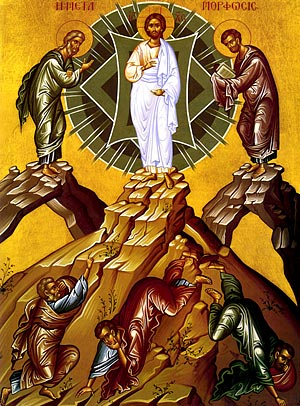
Patristic Exegesis: The Transfiguration


“The analysis of a text ‘involved the investigation of the “story” presented in the text being studied,’ to historikon. Relating the historia concerning a text gave a narrative context that was necessary for understanding the point being made. When John Chrysostom explains the presence of Moses and Elijah at the Transfiguration, he reminds the reader of certain facts that make their significance patent. First, Jesus had been confused by the multitudes with Elijah and the prophets of old. The presence of all three at the Transfiguration makes clear the difference between ‘the servants and the Lord.’ John also mentions that Jesus had been accused of breaking the Law and making himself equal to God. The presence of Moses and Elijah clears Jesus of these charges, for Moses, who gave the Law, would not have stood with a transgressor, or Elijah, who ‘was jealous for the glory of God’ with a blasphemer. The task of interpretation for Chrysostom, then, involved relating what the reader must have in mind in order to understand a given text.”

-Stephen Hildebrand in The Trinitarian Theology of Basil of Caesarea: A Synthesis of Greek Thought and Biblical Truth.

Wednesday, July 15, 2009

Augustine On Theological Reflection

“Augustine locates the enterprise of theological reflection within the economy of redemption in three key ways. First, we can only understand the task the theologian faces by grasping something of the nature and purpose of the redemptive drama as a whole. Only when we see how that drama represents God’s speaking in the world so that we may no longer be subject to it and to its powers can we grasp the full task of attempting to talk of God. Second, Augustine’s conception of theological reflection is, more particularly, part of the Christian’s participation in the mystery of dying, rising, and ascending with Christ: only within this movement may the inner and the outer person be restored and the mind come to imagine God, as far as it may, without delusion or self-deceit. Third, the exegesis of Scripture provides the point of departure for the enterprise of Trinitarian theology and for the conjoint exercise of the rational powers that is central to that enterprise: but we can only come to see what is involved in reading this Scripture through seeing how that text fits within God’s overall redemptive economy. Only then may we see how the materialism of scriptural texts about the divine challenges us to move beyond the material and to begin to develop a grammar of divine distinction from the world—in Augustine’s case to begin to develop a grammar of divine simplicity—in order to secure God’s fully Trinitarian nature. Thus, struggling to apply the grammar of simplicity to the Triune God plays, for Augustine, a small part in the movement of the human being, in Christ, towards God as the creator and source of all wisdom and power and truth.”

-Lewis Ayres in Nicaea and its Legacy: An Approach to Fourth-Century Trinitarian Theology.